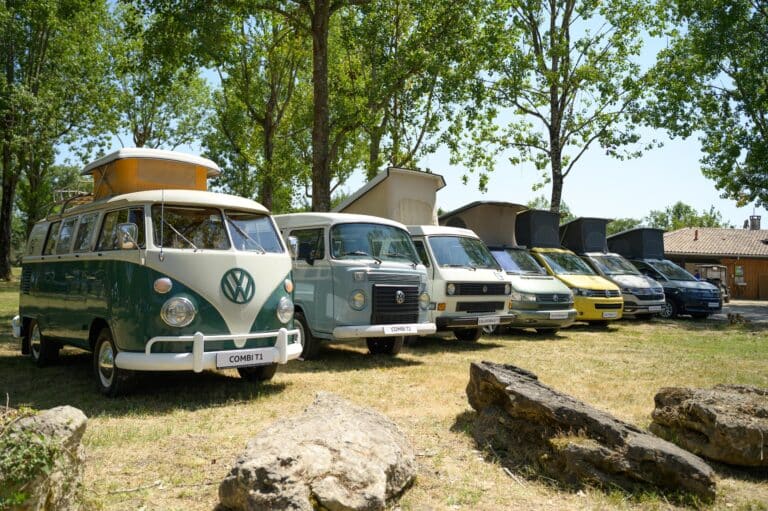
Which VW campervan should I buy? It’s one of the biggest questions facing anyone considering their first Volkswagen campervan.
From the iconic Splitscreen to the latest electric ID. Buzz, Volkswagen has produced vehicles to suit almost every style of camping.
But choosing the right one isn’t always straightforward. Do you buy an affordable older T4, a popular T5, a modern T6.1 or a factory-built California? Would a smaller Caddy suit your needs, or would you be better off with the extra space of a Crafter?
At Dubbed Out, we love seeing all generations of Volkswagen campervans together. Each has its own character, advantages and compromises.
This guide will help you decide which VW campervan best suits your budget, lifestyle, family and camping ambitions.
Which VW campervan is best overall?
For many first-time buyers, a well-maintained VW T5, T6 or T6.1 offers an excellent balance of everyday practicality, camping space and conversion options.
A T4 may suit buyers with a smaller budget who are comfortable owning an older vehicle. A Caddy is ideal for minimalist camping, while a Crafter offers more living space for extended trips.
A California is worth considering if you prefer an integrated factory camping layout. Classic Volkswagen campers appeal to enthusiasts who enjoy the experience of owning a historic vehicle.
There is no single best VW campervan for everyone. The right choice depends on how you intend to use it.
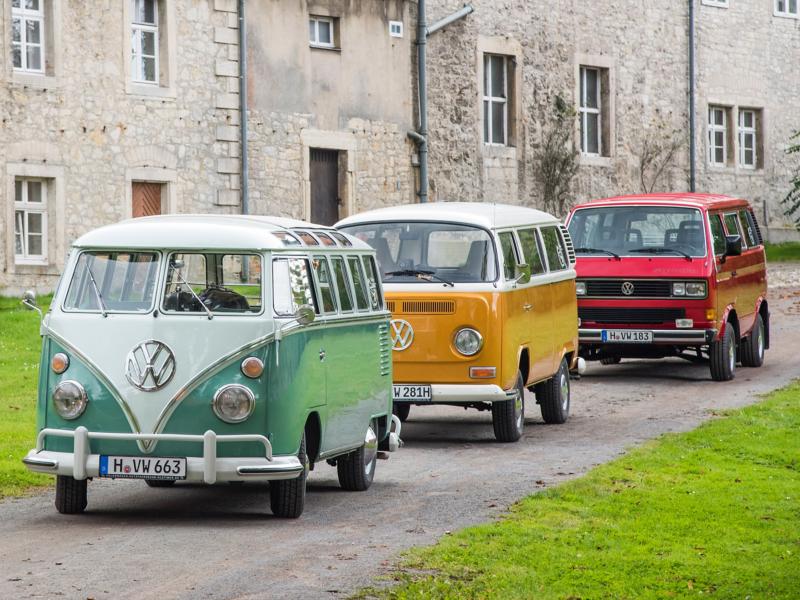
VW campervan comparison at a glance
| VW model | Best suited to | Main consideration |
|---|---|---|
| Splitscreen T1 | Classic VW enthusiasts | Restoration and running costs |
| Bay Window T2 | Traditional camping and classic ownership | Age and corrosion |
| T25 / T3 | Enthusiasts wanting a practical classic | Bodywork and mechanical condition |
| T4 | Budget-conscious buyers | Age-related maintenance |
| T5 / T5.1 | First-time buyers and DIY conversions | Engine choice and service history |
| T6 / T6.1 | Families and everyday campervan use | Higher purchase costs |
| New Transporter | Modern custom conversions | Conversion and accessory compatibility |
| Multivan | Families and flexible day vans | Layout and conversion suitability |
| California | Ready-to-use factory camping | Purchase price and trim differences |
| Caddy / Caddy California | Solo travellers and minimalist couples | Limited interior space |
| Crafter | Extended touring and larger conversions | Vehicle size and weight |
| Grand California | Motorhome-style touring | Cost, size and payload |
| ID. Buzz | Electric campervan enthusiasts | Charging and conversion planning |
Understanding the VW Transporter generations
Volkswagen campervans have changed considerably since the original Transporter arrived in 1950.
The early generations used rear-mounted engines. The T4 introduced a front-engined layout, creating the foundations for the modern Transporter campervan.
| Generation | Approximate European production era | Common name |
|---|---|---|
| T1 | 1950–1967 | Splitscreen |
| T2 | 1967–1979 | Bay Window |
| T3 | 1979–1992 | T25 or Wedge |
| T4 | 1990–2003 | T4 Transporter |
| T5 | 2003–2015 | T5 and T5.1 |
| T6 | 2015–2024 | T6 and T6.1 |
These dates describe the broad European production eras. International production, specialist variants and registration dates can differ.
The modern Volkswagen van range is more complicated. The Multivan, new Transporter and ID. Buzz now occupy separate model lines rather than following a single shared Transporter platform.
VW Splitscreen T1: the original campervan icon
Few vehicles attract as much attention as a Volkswagen Splitscreen. Its distinctive front windows and unmistakable styling helped establish the campervan culture we enjoy today.
A Splitscreen is an experience as much as a means of transport. It suits owners who appreciate classic motoring and enjoy taking life at a slightly slower pace.
Why buy a Splitscreen?
- Iconic Volkswagen styling.
- A strong enthusiast community.
- Traditional camping character.
- Excellent appeal at VW gatherings and shows.
What should you consider?
Age, corrosion, restoration quality and previous modifications deserve particular attention. Running an older vehicle can require more involvement than owning a modern campervan.
Do not assume that a beautifully restored Splitscreen will be cheap to maintain. Buy it because you love it, not because you expect effortless modern motoring.
Best for: Enthusiasts who want an iconic classic Volkswagen and enjoy the ownership experience.
VW Bay Window T2: traditional campervan life
The Bay Window retains much of the classic VW charm while offering a different body design and improved practicality over its predecessor.
Many examples feature traditional campervan interiors, lifting roofs and period conversion equipment. Others have undergone extensive restoration or modernisation.
The Bay remains an appealing choice for relaxed weekends, festivals and owners who value character over modern driving technology.
As with the Splitscreen, body condition and restoration quality are central to choosing a good example.
Best for: Classic VW fans who want a traditional camping experience.
VW T25 or T3: the practical classic
The T25, known internationally as the T3, offers a distinctive square shape and a practical interior.
Its rear-engined design provides a driving and camping experience very different from later Transporters. Available conversions include pop-tops, high-tops and various traditional camper layouts.
For many buyers, the T25 provides a more accessible route into classic VW ownership than a restored Splitscreen.
Why consider a T25?
- Distinctive retro styling.
- Useful interior space.
- A wide variety of established campervan layouts.
- An enthusiastic classic VW community.
However, corrosion, cooling systems and previous mechanical work require careful assessment. A cheap T25 needing extensive welding can quickly become an expensive project.
Best for: Buyers who want classic Volkswagen character with practical camping accommodation.
Read our detailed VW T25 buying guide before arranging a viewing.
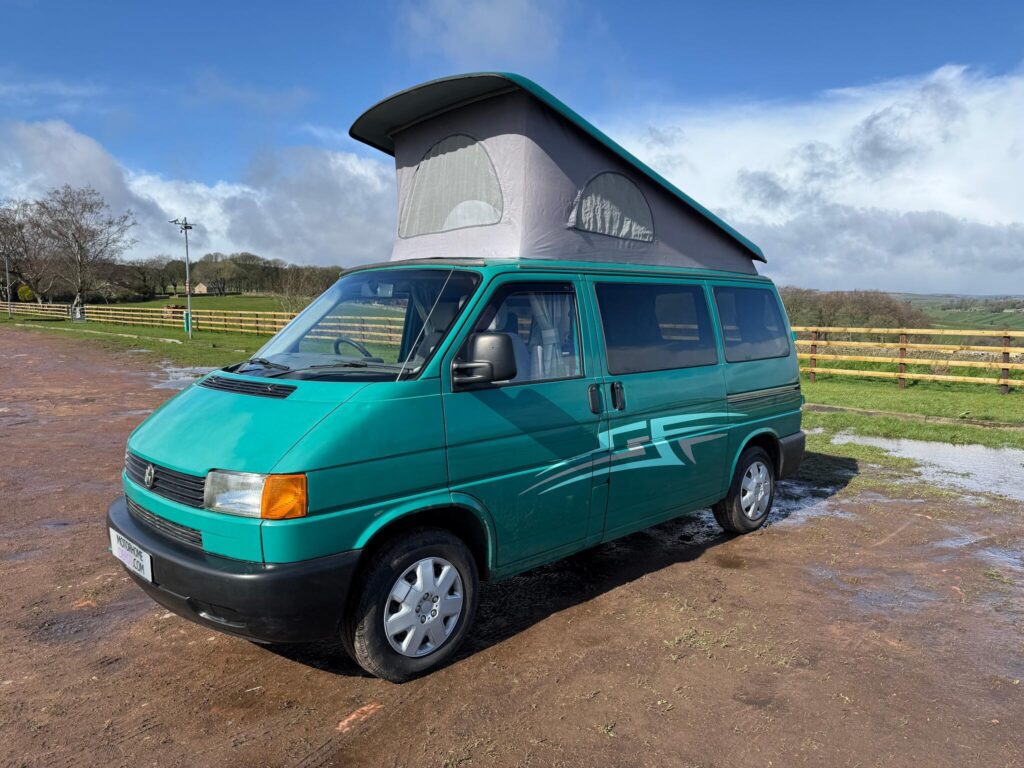
VW T4: a great introduction to Transporter camping
The T4 brought Volkswagen campervans into a new era with its front-mounted engine and more conventional driving layout.
It remains popular with owners who want a relatively affordable Transporter without moving into classic rear-engined Volkswagen ownership.
There are plenty of established conversions, including simple day vans, professional campers and owner-built projects.
Why consider a T4?
- Potentially lower entry costs than newer Transporters.
- A practical and familiar campervan shape.
- Established conversion options.
- Strong community knowledge and enthusiast support.
What are the drawbacks?
Every T4 is now an older vehicle. Corrosion and age-related maintenance can outweigh any initial saving.
Older diesel examples may also face charges in certain clean air or low-emission zones. Check the individual registration against the relevant scheme.
Best for: Budget-conscious buyers who are comfortable maintaining an older vehicle.
Read our complete VW T4 buying guide.
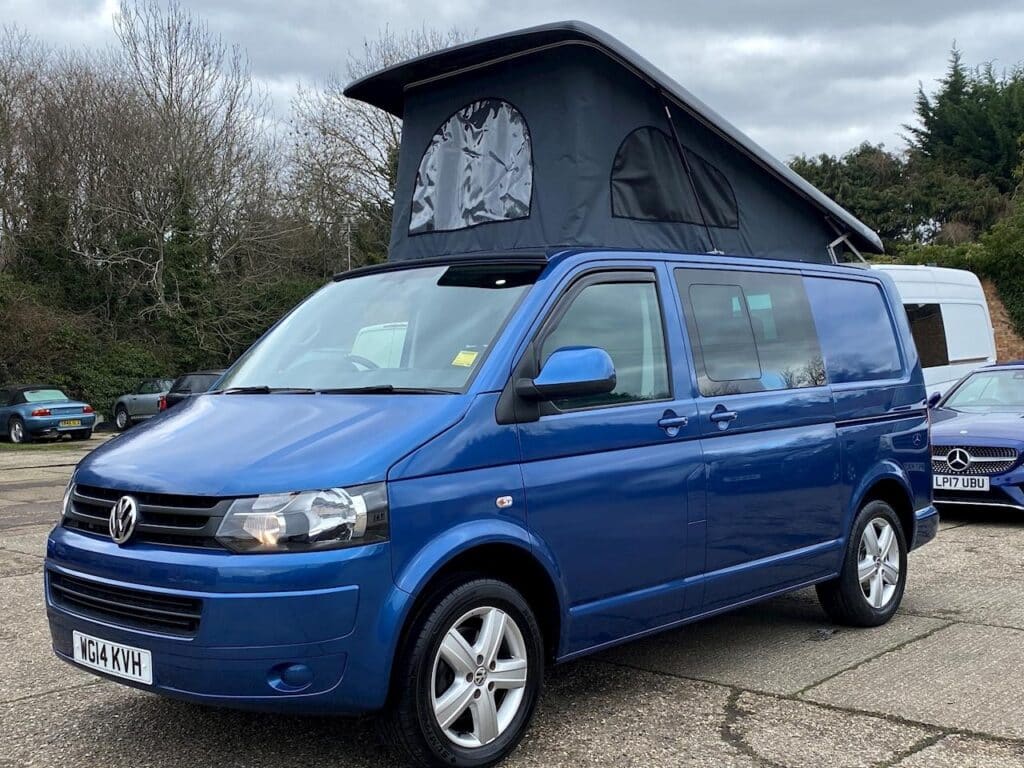
VW T5 and T5.1: the popular all-rounder
The T5 is a natural starting point for many people considering their first campervan.
It combines everyday usability with a huge variety of conversion layouts, accessories and upgrades. Whether you want a simple bed in the back or a fully equipped touring camper, there are plenty of possibilities.
The facelifted T5.1 arrived around 2010, bringing updated styling and changes to the engine range.
Why consider a T5?
- Extensive campervan conversion options.
- A large selection of used vehicles.
- Established aftermarket accessories.
- Suitable for many families and everyday drivers.
- Potentially more affordable than equivalent newer Transporters.
Engine choice, maintenance history and conversion quality are important. Some repairs can be costly, so avoid buying solely on appearance or mileage.
A well-maintained T5 can be a better purchase than a newer vehicle with neglected servicing.
Best for: First-time campervan buyers, DIY converters and owners wanting a versatile all-rounder.
Read our VW T5 and T5.1 buying guide.
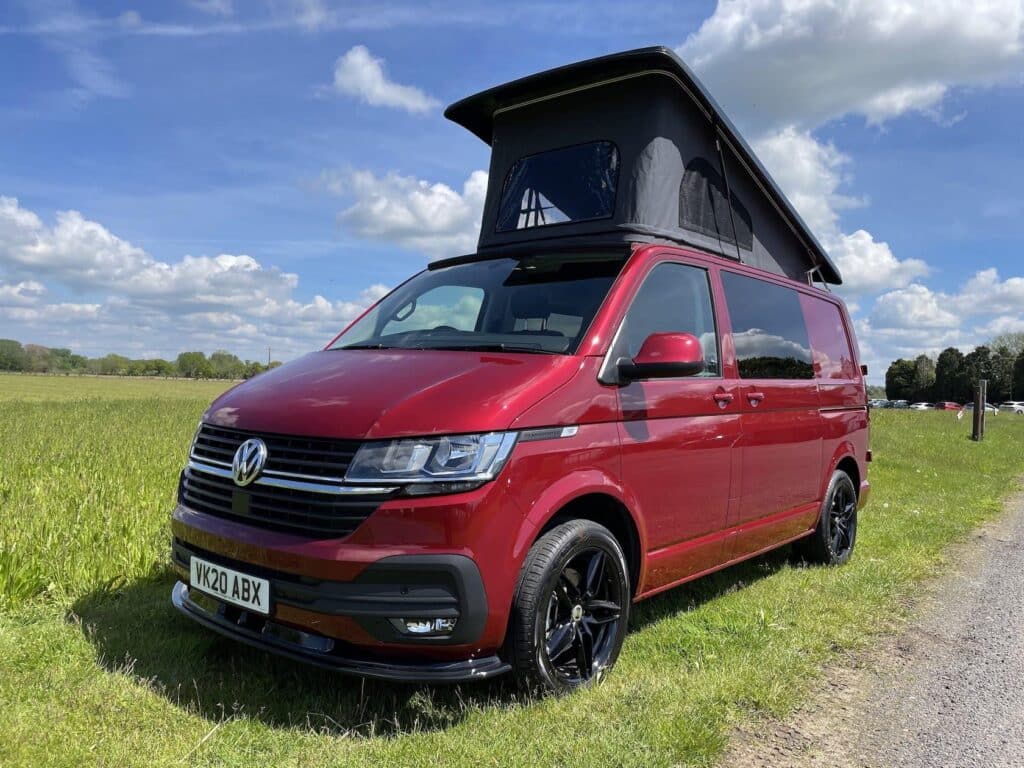
VW T6 and T6.1: modern Transporter camping
The T6 and T6.1 build on the familiar Transporter formula. They offer more modern interiors, equipment and driving technology while retaining the established campervan shape.
The T6 arrived in 2015, followed by the facelifted T6.1 in 2019.
For many families, these models strike an excellent balance between weekend camping and everyday motoring.
Why consider a T6 or T6.1?
- Modern driving experience.
- A wide selection of professional and DIY conversions.
- Established camping accessories and upgrades.
- Suitable layouts for couples and families.
- More modern equipment, depending on specification.
Should you buy a T6 or T6.1?
The T6.1 may appeal if you prefer newer styling, updated dashboard technology and available driver assistance equipment.
A well-equipped T6 can offer better value if you do not need those newer features.
Consider the condition, mileage, engine, service history and quality of the camper conversion before choosing between them.
Both generations can have expensive mechanical or emissions-system repairs. A newer registration number is not a substitute for a proper inspection.
Best for: Buyers wanting a modern, versatile Volkswagen campervan for regular camping and everyday use.
Read our VW T6 and T6.1 buying guide.
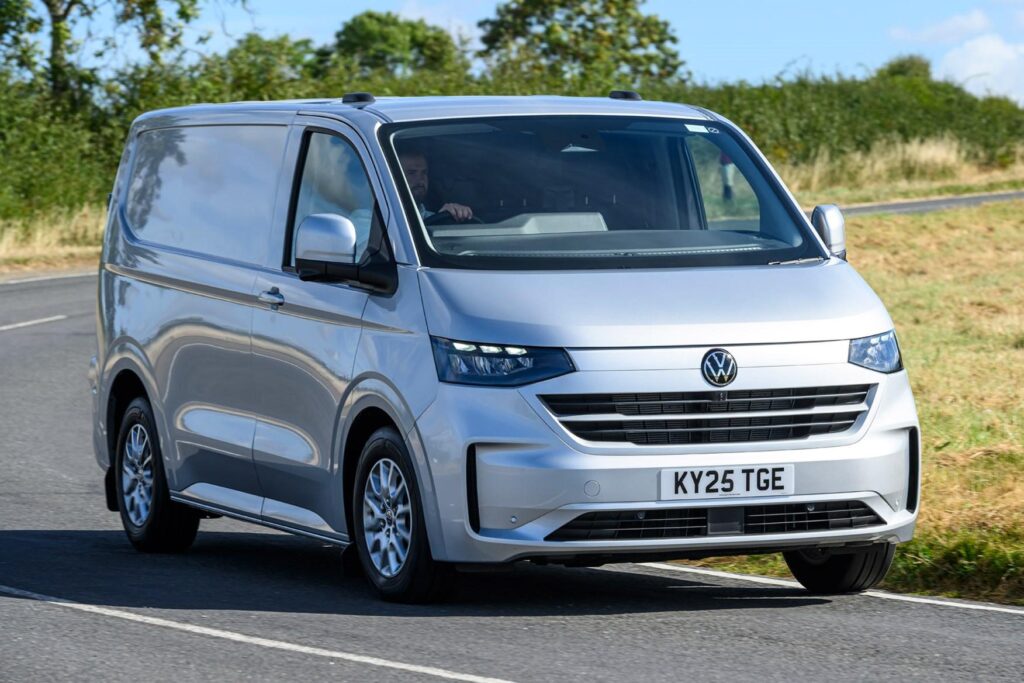
What is the difference between the T7 Multivan and the new Transporter?
This is where Volkswagen’s modern range can become confusing.
For decades, buyers could follow a relatively straightforward sequence of Transporter generations. The current range no longer follows that pattern.
VW Multivan
The Multivan introduced in 2021 uses Volkswagen’s MQB passenger-vehicle platform. It prioritises passenger comfort and flexible seating arrangements.
It appeals to families seeking a vehicle that can combine everyday transport with occasional camping. It also forms the basis of the newer California generation.
The new Volkswagen Transporter
The new Transporter reached the UK market in 2025. It shares its underlying platform with the Ford Transit Custom.
It is a separate vehicle from the Multivan and offers a commercial-van starting point for campervan conversions.
Diesel, electric and plug-in hybrid versions feature within the broader Transporter range. Availability depends on the individual model and specification.
Why the distinction matters
Conversion furniture, pop-top roofs, wheels, camping accessories and other equipment designed for earlier Transporters may not fit the newer vehicles.
Always check compatibility with the exact vehicle rather than buying equipment simply described as suitable for a T7.
Read our VW T7 buying guide for a fuller explanation of the Multivan, the new Transporter and what that means for camper buyers.
Bottom line: The Multivan, new Transporter and new California are not simply facelifted versions of the T6.1. Understand which vehicle you are buying before planning a conversion.
VW California: a factory-built campervan
The California offers an alternative to buying a converted Transporter.
Its appeal lies in Volkswagen’s integrated camping layout, purpose-designed equipment and combined vehicle and camper specification.
However, not every California includes the same camping facilities.
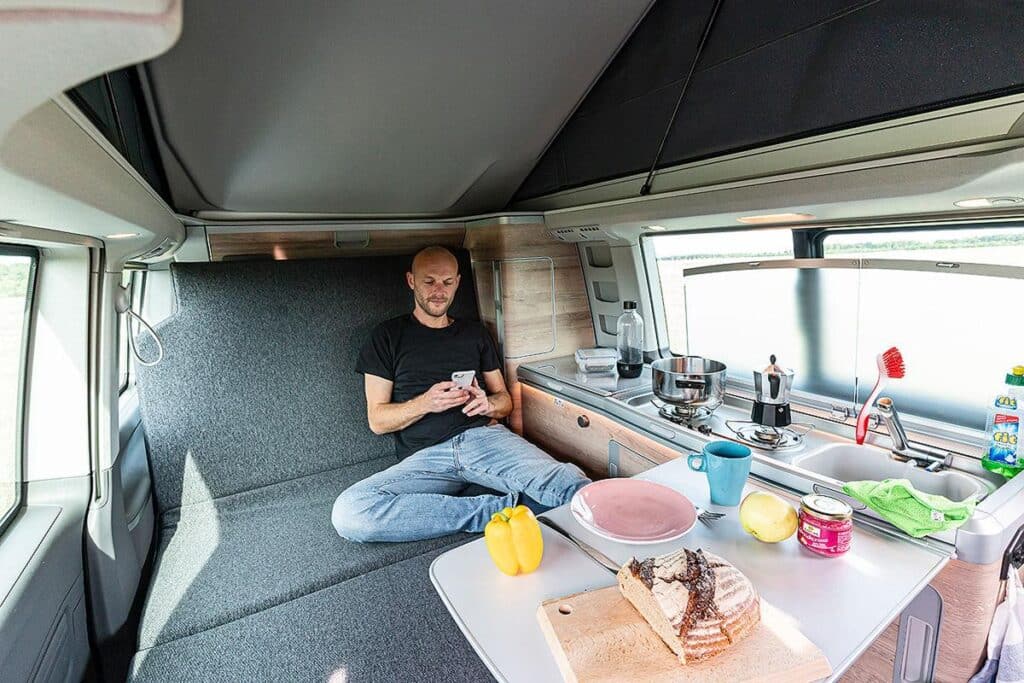
California Beach, Coast and Ocean
Depending on generation and market, California models include different combinations of seating, kitchen equipment, roof mechanisms and camping facilities.
Beach models generally offer a more flexible approach to everyday use and camping. Some versions have limited kitchen facilities compared with more comprehensively equipped models.
Coast and Ocean versions typically appeal to buyers wanting a more integrated camping layout.
Earlier generations also included other trim names, such as the T5 California SE.
Check the actual specification rather than assuming every California has a full kitchen, the same number of travelling seats or an electrically operated roof.
The new California
The newer California is based on the long-wheelbase Multivan rather than the traditional Transporter platform.
This introduces a different vehicle architecture and camping layout. It is important to understand these differences when comparing it with older T5, T6 and T6.1 Californias.
Best for: Buyers who prefer an integrated factory campervan rather than commissioning their own conversion.
Explore the differences between generations in our used VW California buying guide.
VW Caddy: is a smaller campervan big enough?
Bigger isn’t always better. For some people, a Volkswagen Caddy provides all the camping space they actually need.
A Caddy can suit solo travellers, couples, weekend adventurers and people who need their campervan to double as an everyday vehicle.
The longer Caddy Maxi is particularly worth considering if you need additional sleeping or storage space.
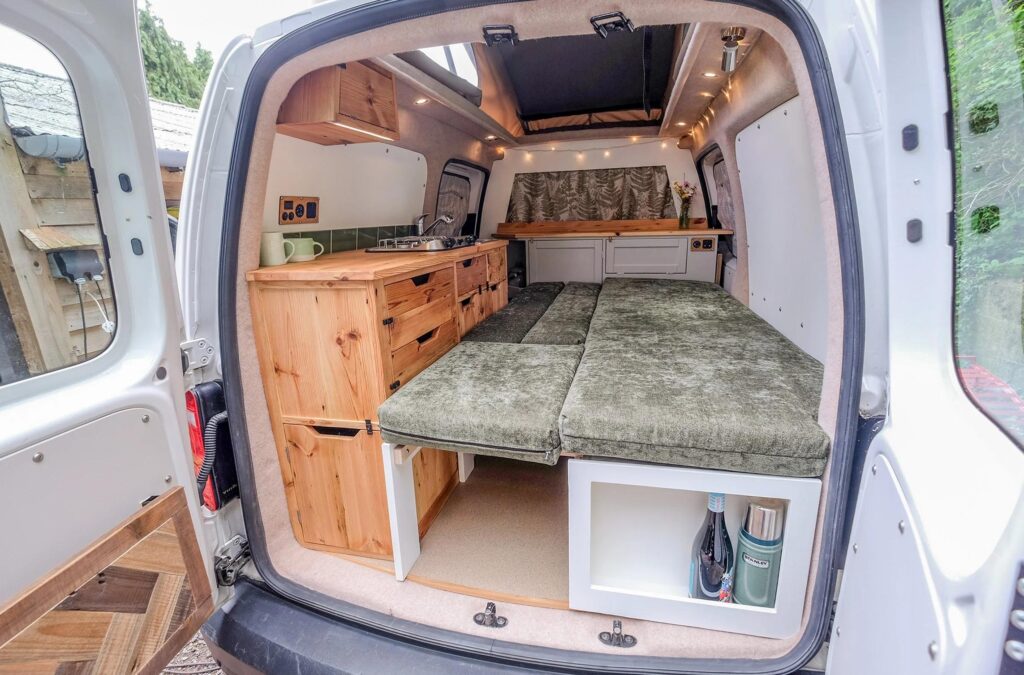
Advantages of a Caddy camper
- Compact dimensions.
- Generally easier parking than larger campervans.
- Suitable for simple and removable camping conversions.
- Useful for everyday transport.
- Appealing to minimalist campers.
What do you sacrifice?
Interior standing room, storage and cooking space are generally more limited than in a Transporter.
You may find yourself relying on an awning or campsite facilities for extended trips, particularly during poor weather.
The factory Caddy California provides another option for buyers who prefer an integrated compact camping package.
Best for: Solo travellers, minimalist couples and owners prioritising compact everyday transport.
Discover the different generations in our history of the Volkswagen Caddy.
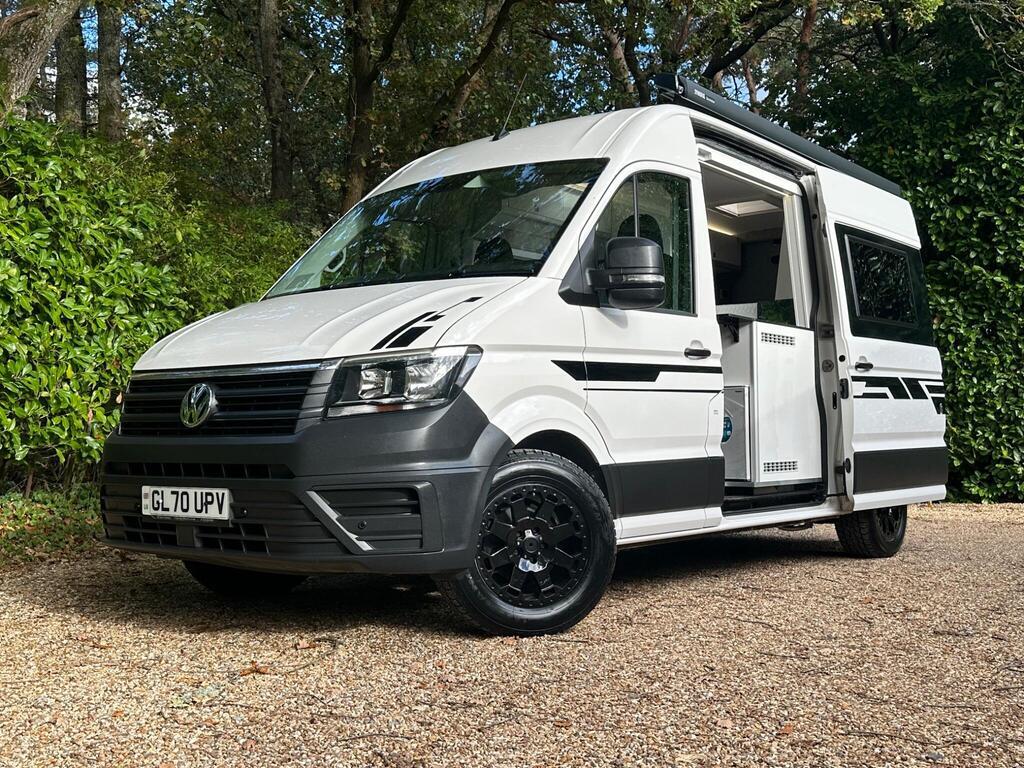
VW Crafter: when a Transporter isn’t big enough
A Transporter can be a brilliant campervan, but sometimes you simply need more room.
The Volkswagen Crafter provides a larger starting point for conversions, with different body lengths and roof heights available across its range.
Depending on the vehicle and conversion, a Crafter can accommodate a permanent bed, larger kitchen, additional storage, shower and toilet.
Why choose a Crafter?
- More interior living space.
- Greater flexibility when planning a conversion.
- Potential for permanent sleeping arrangements.
- Space for more extensive water and electrical systems.
- Suitable for extended touring.
What should you consider?
A larger campervan brings additional challenges. Parking, narrow roads, fuel consumption, vehicle height and weight all deserve consideration.
Do not assume that every Crafter has enough payload for a comprehensive conversion and all your belongings.
Some configurations have a maximum authorised mass above 3,500kg, which may require a different driving licence entitlement.
Best for: Extended touring, larger custom conversions and owners who prioritise living space over compact dimensions.
If you are considering building your own, read our complete campervan conversion guide.
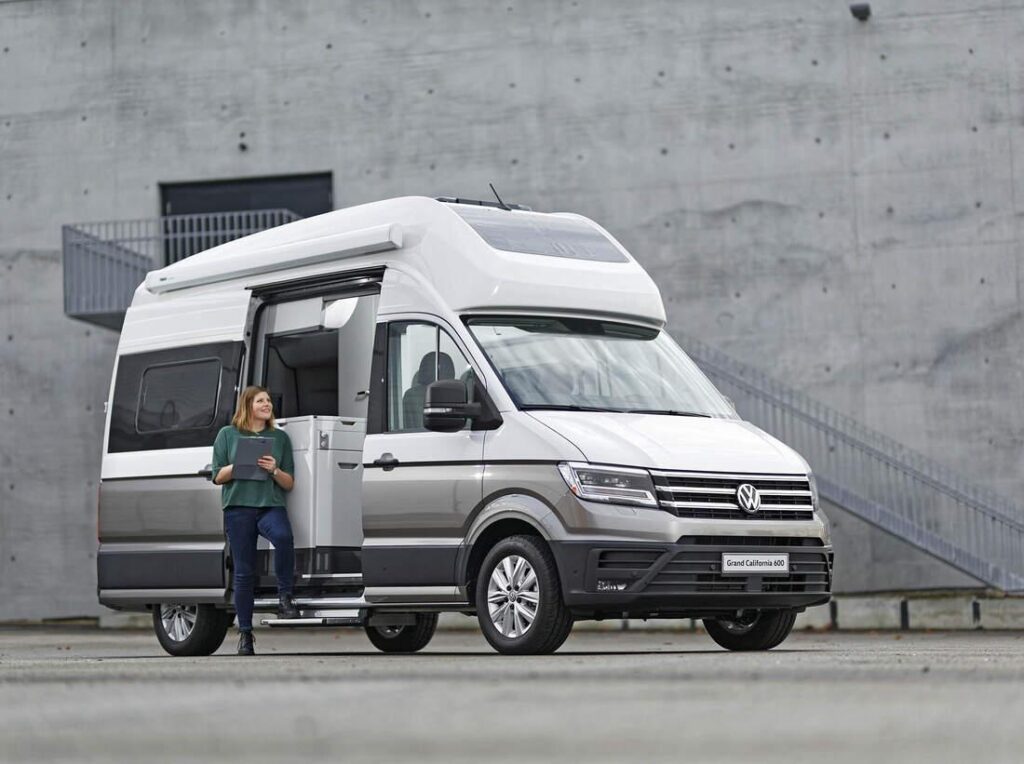
VW Grand California: factory motorhome-style camping
The Grand California takes Volkswagen camping into larger vehicle territory.
Based on the Crafter, it offers more extensive living accommodation than a traditional Transporter-based California.
The Grand California 600 and 680 provide different layouts, dimensions and sleeping arrangements. Compare the exact specification to establish which suits your needs.
Integrated bathroom facilities and more extensive living space can make a Grand California particularly appealing for longer trips.
However, its size, purchase cost and weight require careful consideration.
Best for: Buyers who want factory-integrated camping facilities and a larger motorhome-style living experience.
For more help choosing between vehicle sizes, read our campervan versus motorhome guide.
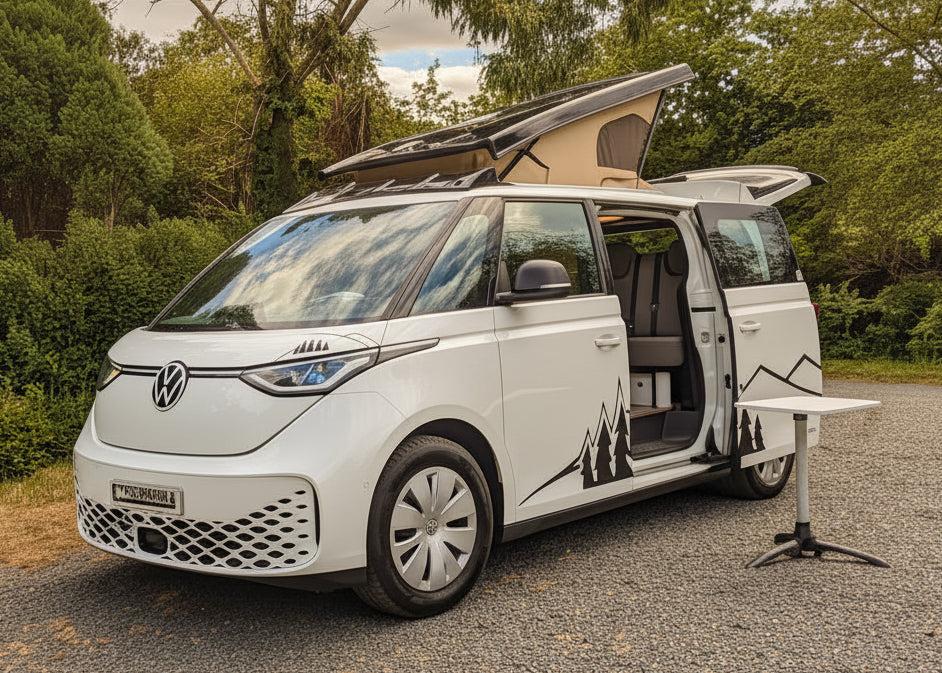
VW ID. Buzz: electric campervan adventures
The ID. Buzz combines styling inspired by classic Volkswagen buses with modern electric vehicle technology.
It offers a different approach to campervan ownership, particularly for drivers who already have access to convenient charging facilities.
Camping options include removable sleeping equipment and specialist conversions. Check which equipment is available and suitable for your particular vehicle.
Advantages of electric camping
- Quiet electric driving.
- No tailpipe emissions while driving.
- Modern vehicle technology.
- Potentially convenient home charging.
Considerations before buying
Think about charging availability on your usual routes and at your destinations.
Additional conversion weight, motorway speeds, colder temperatures and external accessories can affect driving range.
Investigate the vehicle’s battery condition, remaining warranty and the suitability of any conversion work.
Do not assume that the vehicle’s traction battery can automatically supply all your camping appliances. Available power functions depend on the vehicle and installed equipment.
Best for: Buyers who want electric motoring and are comfortable planning their camping around charging requirements.
Read more about the electric Volkswagen in our ID. Buzz article.
Which VW campervan is best for your lifestyle?
| Your priority | Models to consider |
|---|---|
| First campervan | T5, T6, T6.1 |
| Smaller purchase budget | T4, older T5, Caddy |
| Classic Volkswagen ownership | Splitscreen, Bay, T25 |
| Family camping | Transporter, California, Crafter |
| Daily driving and commuting | Caddy, Transporter, Multivan |
| Solo weekend adventures | Caddy, compact Transporter |
| Long-distance touring | Transporter, California, Crafter |
| Permanent bed and bathroom | Suitable Crafter conversion, Grand California |
| DIY campervan conversion | T4, T5, T6, T6.1, new Transporter, Crafter, Caddy |
| Factory-built campervan | Caddy California, California, Grand California |
| Electric camping | ID. Buzz, suitable electric Transporter conversion |
These recommendations are starting points rather than strict rules. An individual campervan’s layout and condition can matter more than its model name.
Which VW campervan offers the best value for money?
Value for money does not necessarily mean buying the cheapest campervan.
A cheaper vehicle needing welding, mechanical repairs and a replacement interior could cost considerably more than a well-maintained alternative.
Likewise, a newer van with an expensive conversion may include equipment you rarely use.
Entry-level budget
Start by considering older T4s, T5s and simple Caddy conversions. Allow enough money for inspections, repairs and essential maintenance.
Mid-range budget
Compare well-maintained T5 and T5.1 conversions with available T6 examples. Pay attention to the equipment included and the work already completed.
Higher budget
Consider T6.1 conversions, factory Californias, newer Transporters and suitable Crafter conversions.
Premium budget
New factory campers, comprehensively equipped bespoke conversions and Grand California models provide additional choices.
Classic Volkswagen values do not necessarily follow these categories. Restoration history, originality and condition can make some older models particularly expensive.
For a more detailed breakdown of purchase and ownership expenditure, read our guide to the cost of buying your first campervan.
Short wheelbase or long wheelbase?
Many Volkswagen vans are available in different wheelbase or body-length configurations.
The extra space can make a considerable difference to your camping layout.
| Short wheelbase | Long wheelbase |
|---|---|
| Generally easier to manoeuvre | More space for furniture and storage |
| Better suited to tighter parking spaces | Additional flexibility for sleeping arrangements |
| Suitable for compact everyday campers | Useful for longer trips and extra equipment |
| Less room for permanent facilities | May make everyday parking more challenging |
Always compare the actual vehicle dimensions. Wheelbase descriptions do not guarantee identical dimensions across different generations.
If you will be using the campervan as your only vehicle, consider whether it will comfortably fit where you park at home and work.
Pop-top or high-top campervan?
Vehicle height can be just as important as length.
A pop-top offers additional headroom when parked without permanently raising the roof to the same extent as a fixed high-top.
A high-top provides permanent standing room and may allow additional overhead storage.
Pop-tops are popular with owners who want a flexible campervan for everyday driving. High-tops can appeal to people who value permanent headroom and regularly camp for longer periods.
Neither arrangement guarantees access to height-restricted car parks. Measure the completed vehicle, including roof bars and accessories.
Read our VW Transporter pop-top conversion guide.
Should you buy a converted VW or build your own?
Once you have chosen a Volkswagen model, you still need to decide how you want your campervan equipped.
Buying an existing conversion
An existing campervan lets you start camping sooner. You can inspect the layout, try the equipment and establish whether it suits your needs before buying.
Commissioning a professional conversion
A professional conversion can allow you to choose your own layout, materials and equipment. Costs and waiting times vary considerably.
Building your own campervan
A self-build gives you greater control over the design and lets you develop the campervan around your own requirements.
However, tools, materials, specialist work and mistakes all contribute to the overall cost.
Some excellent campervans have been built by their owners. Equally, an expensive professional conversion is not automatically the right layout for you.
Our complete campervan conversion guide explains the different approaches, costs and legal considerations.
Don’t overlook travelling seats, sleeping space and payload
A campervan advertised as a four-berth does not necessarily provide four suitable travelling seats.
Check that everyone travelling has appropriate seating and restraints. Consider the suitability of any additional seat installations and child-seat arrangements.
Also check how much weight the completed campervan can legally carry.
Furniture, water, batteries, passengers, bikes and camping equipment all add weight. Four people setting off for a week’s camping can use considerably more payload than you might expect.
Read our related guides:
- Campervan beds and sleeping arrangements
- Campervan payload explained
- VW T26, T27, T28, T30 and T32 weight classifications
- Campervan driving licence requirements
Bottom line: Choose a campervan that can legally accommodate everyone and everything you intend to take camping.
Which VW campervan is most reliable?
There is no single Volkswagen generation that can be guaranteed to be more reliable than every other model.
Engine design, maintenance history, mileage, driving habits and previous repairs all influence reliability.
Older vehicles may suffer from corrosion and age-related problems. Newer vehicles may have more complex electrical, emissions and safety systems.
Use our individual model buying guides to research specific engine and mechanical issues.
Where possible, arrange an independent inspection by someone familiar with the model you are considering.
What about insurance, road tax and emissions zones?
Do not overlook the ongoing costs and practical restrictions associated with your chosen campervan.
Confirm that your insurer will cover the vehicle, its existing conversion and any modifications you intend to make.
Check the actual vehicle’s tax classification, driving licence requirements and emissions-zone eligibility.
A newer vehicle does not automatically cost less to own. Similarly, changing a vehicle’s recorded body description does not automatically reduce its road tax.
Useful resources include:
- UK campervan insurance guide
- DVLA motor caravan registration guide
- GOV.UK Clean Air Zones
- Transport for London vehicle checker
Before buying: download our free campervan checklist
Once you have narrowed down your choice, the next step is inspecting individual campervans.
Our free Dubbed Out buying checklist covers vehicle history, mechanical checks, conversion quality, damp, electrical systems, gas, questions for the seller and equipment demonstrations.
Free Used Campervan Buying Checklist
Five printable A4 pages to take with you when viewing your next campervan.
Download Free Buying Checklist (PDF)
Created by Dubbed Out VW Community. Free to download, print and share.
You can also read the full used campervan buying checklist online.
Already bought a campervan? Read our complete campervan maintenance and safety guide before heading off on your first adventure.
Frequently asked questions about choosing a VW campervan
Which VW campervan is best for a first-time buyer?
A well-maintained T5, T6 or T6.1 is a sensible starting point for many beginners. These models offer a wide variety of established campervan conversions and practical everyday usability.
Which VW campervan is cheapest to buy?
Older T4s, some T5s and simple Caddy conversions can offer relatively affordable entry points. However, condition and repair costs can significantly affect the total cost of ownership.
Is the VW T6 better than the T5?
The T6 offers newer technology and styling, but a well-maintained T5 may represent better value. Compare individual vehicles, engine choices, service histories and conversion quality.
Is the T6.1 worth buying over a T6?
The T6.1 may appeal to buyers wanting newer dashboard technology and available driver assistance features. Whether it is worth the additional cost depends on your priorities and the individual vehicles.
Is the new Transporter the same as the T7 Multivan?
No. The Multivan uses Volkswagen’s MQB platform. The newer Transporter shares its underlying platform with the Ford Transit Custom. Their conversion equipment and accessories are not automatically interchangeable.
Is a California better than a converted Transporter?
A California offers an integrated factory camping layout. A converted Transporter may offer greater flexibility or better value for your particular needs. Compare the individual specifications rather than assuming one is always superior.
Can a family of four camp in a VW Transporter?
Yes, with a suitable layout, sleeping arrangements, travelling seats and sufficient payload. A pop-top can provide additional sleeping space in many conversions.
Is a VW Caddy big enough for two people?
A suitably converted Caddy can accommodate two people for simple camping trips. Longer Caddy Maxi models can provide extra space. Storage and indoor living space remain more limited than in a Transporter.
Should I buy a Transporter or a Crafter?
Choose a Transporter if everyday usability and compact dimensions are important. Consider a Crafter if you prioritise living space, permanent facilities and extended touring.
Which VW campervan is best for winter camping?
Any suitable model can work well with appropriate insulation, ventilation, heating and winter preparation. Conversion quality and equipment are generally more important than the vehicle generation alone.
Can I use a VW campervan as my everyday vehicle?
Yes. Compact Caddy and Transporter conversions are particularly popular for combining everyday transport with camping. Check parking restrictions, vehicle dimensions and the suitability of the conversion for daily use.
Is an electric VW campervan practical?
An electric campervan can be practical if its driving range, charging options, payload and camping equipment suit your travel patterns. Assess these factors before purchasing or commissioning a conversion.
Bottom line: buy the campervan that suits you
There is something special about every generation of Volkswagen campervan.
The classic Splitscreen turns heads wherever it goes. The T4 offers an established route into Transporter ownership. The T5 remains a versatile all-rounder, while the T6 and T6.1 appeal to buyers wanting more modern motoring.
The Caddy proves you do not always need a large vehicle to enjoy camping. The Crafter offers the space for longer adventures, while the California provides a factory-designed camping alternative.
And the latest Volkswagen models introduce new possibilities for the next generation of campervan owners.
Our advice is simple. Buy the best condition vehicle you can reasonably afford, with a layout that suits how you actually intend to camp.
Do not spend your entire budget on the purchase. Leave something for maintenance, unexpected repairs and, of course, the adventures you bought it for.
Because the best campervan isn’t necessarily the most expensive, the newest or the one with the biggest wheels.
It’s the one you’re actually out enjoying.
Join the Dubbed Out VW Community
Still deciding between a T4, T5, T6, California, Caddy or Crafter?
Join the Dubbed Out VW Community on Facebook. Speak to fellow owners, explore different campervan layouts and learn from people who regularly use these vehicles.
Our community welcomes all kinds of campervans, from lovingly restored classics to modern conversions and everything in between.
Discover more practical advice, camping inspiration and Volkswagen guides at dubbedout.co.uk.
See the different VW campervans at Dubbed Out Festival
One of the best ways to explore different campervan generations and layouts is to see them in person.
At Dubbed Out Festival, you’ll find everything from classic Splitscreens and Bay Windows to modern Transporters, Californias and larger campervan conversions.
It’s a brilliant opportunity to meet fellow owners, exchange ideas and discover what works for different styles of camping.
Dubbed Out Festival takes place at the Royal Cheshire Showground, Knutsford, from 29 July to 1 August 2027.
Tickets are scheduled to go on sale on 31 January 2027 through our authorised ticket provider, Ticket Tent.
Register for early ticket access and festival announcements at dubbedoutfestival.co.uk.
Further information
- Volkswagen Commercial Vehicles UK
- Volkswagen Newsroom: Brand history
- GOV.UK MOT history checker
- GOV.UK vehicle safety recalls
- GOV.UK vehicle weights explained
Published November 2026. Vehicle specifications, equipment, prices and availability vary by generation, market and individual vehicle. Confirm the exact specification before purchasing.