

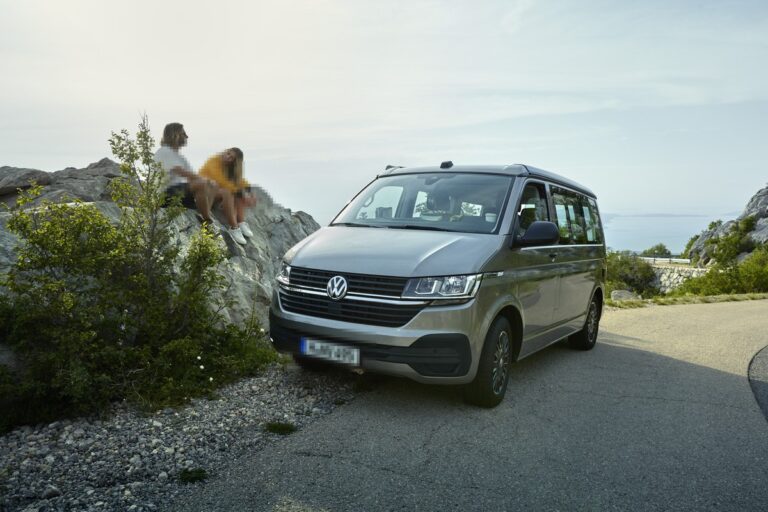
A factory California is Volkswagen’s own camper, built in-house. It is not a converted panel van with California-style bits added later. This VW California buying guide is for used T5, T6 and T6.1 models. If you want the newest van, see our California facelift post. If you are buying a converted Transporter, start with our T6 buying guide.
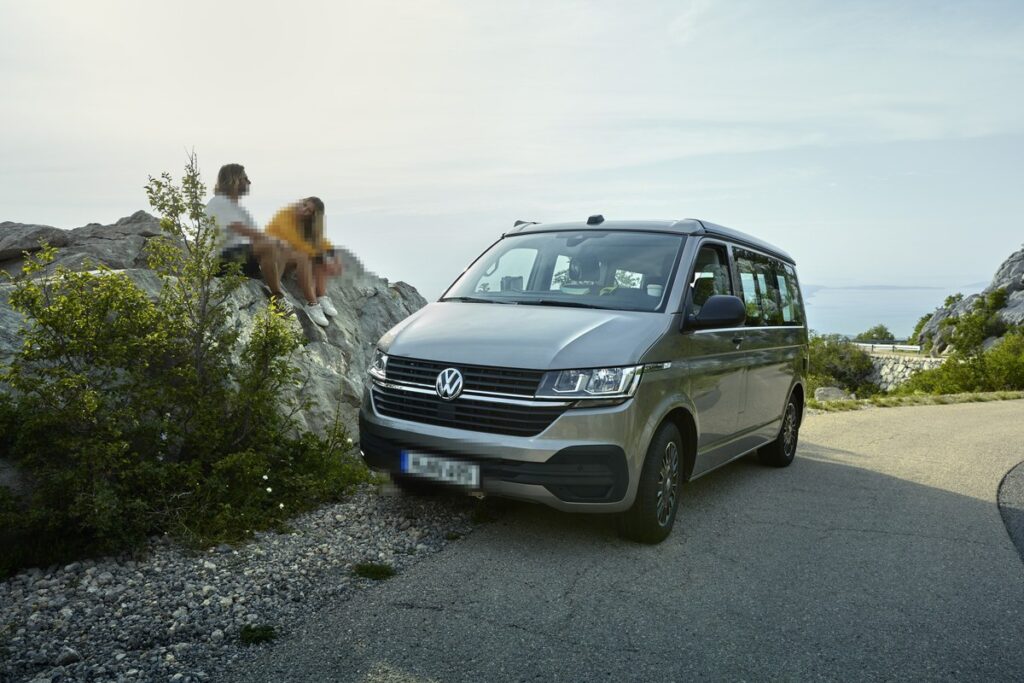
VW California buying guide: T5, T6 or T6.1?
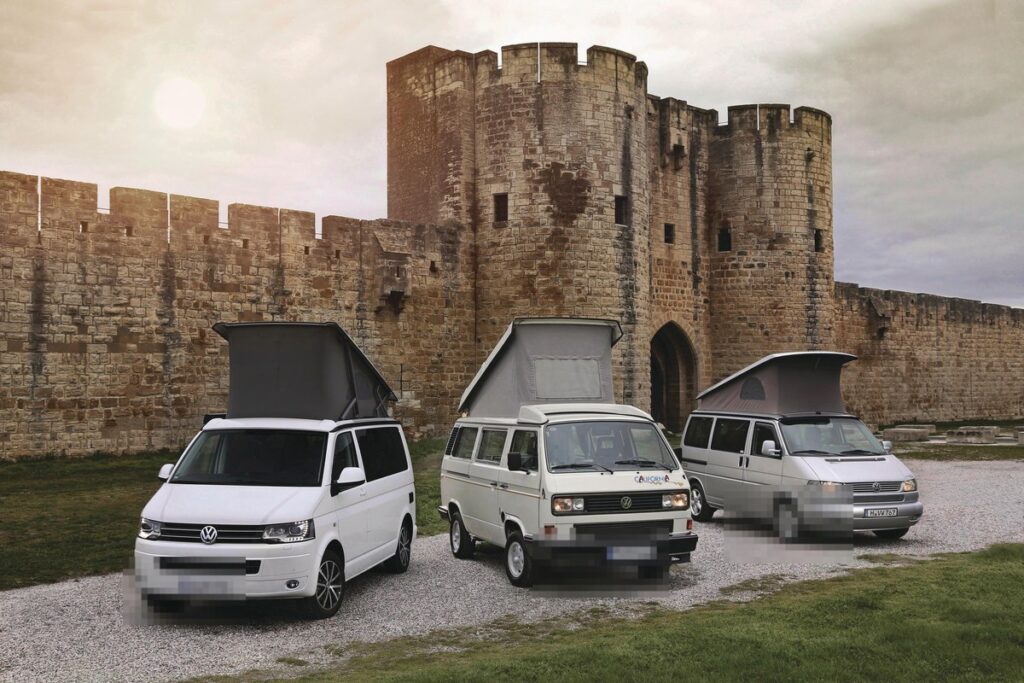
Volkswagen’s UK history dates the first Volkswagen-built California to 2003. It had an electrohydraulic pop-up roof. Volkswagen built it in Hanover. A later 2019 UK pack also says the California has been on sale since 2004. Either way, the used market here starts with the T5-era factory camper.
The T5 ran from 2003 to 2015. The facelifted T5.1, with the new nose, reached UK Van Centres in early 2010. For the base van, see our T5 buying guide.
The T6 went on sale in the UK in September 2015. The official UK California 6.1 flyer carries a 26 September 2019 issue date. That facelift brought a new nose, a new dash and a camper control panel with a touch-screen. Earlier Westfalia Californias on the T3 and T4 are a different story.
Beach, Coast or Ocean?
The names change by generation, so trust the official UK lists, not memory.
T5: SE and Beach
On the T5, the official January 2013 UK brochure lists two models: California SE and California Beach.
The SE has a fitted kitchen. That means two gas burners, a 42-litre fridge, a sink, and 30-litre fresh and waste tanks. It also has an electrically operated aluminium pop-up roof that rises hydraulically. A leisure second battery with a cut-off relay, and a 230V inverter, came as standard. The 2.0 TDI came in 140PS, or 180PS as a BiTDI.
The Beach has a manual pop-up roof. It can seat up to seven and sleep four. It does not have the SE’s fully fitted kitchen. The brochure also offered the Beach with a 114PS or 140PS 2.0 TDI.
T6: Beach and Ocean
On the T6, official UK material lists Beach and Ocean. The July 2015 UK data sheet and the September 2019 UK brochure both use those two names. The Ocean has an electro-hydraulic pop-up roof with LED lighting. It also has a kitchenette with a two-ring gas cooker, a 42-litre cool box, and a sink. Official kit includes two auxiliary batteries and a 230V supply with an inverter. The Beach keeps a manual pop-up roof, a second battery with a cut-off relay, and no factory side kitchen. It can still seat up to seven and sleep four.
At T6 launch, official UK engines were Euro 6 diesels. The Beach had 102PS or 150PS. The Ocean had 150PS, plus a higher-output option. The 2015 data sheet lists 204PS. The 2019 pack lists 199PS.
T6.1: Coast, then Beach Tour and Surf
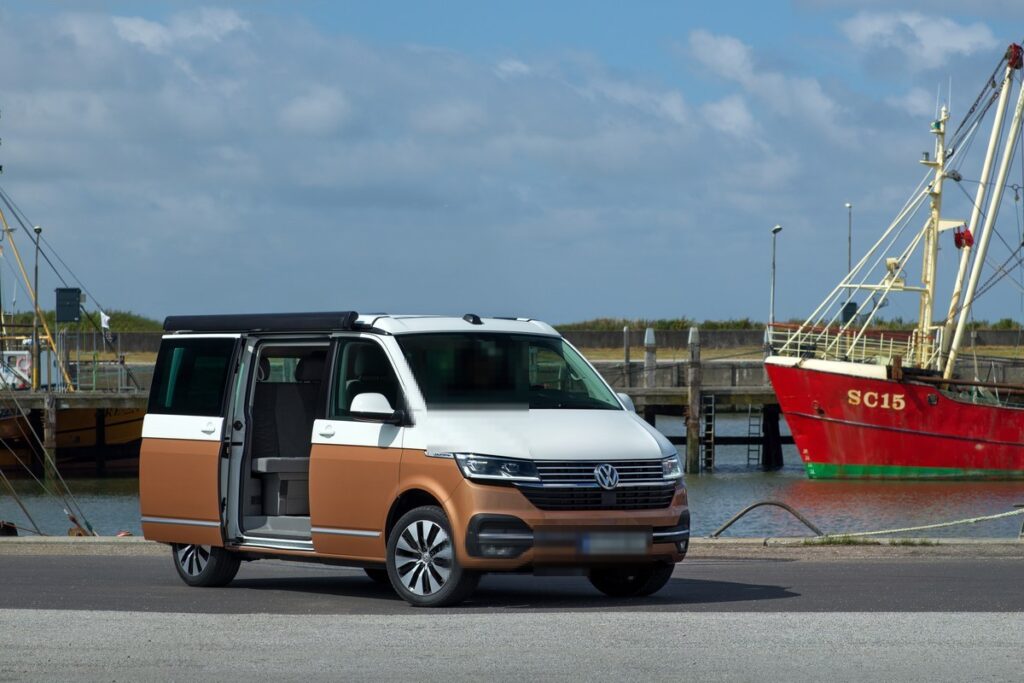
On the T6.1, official UK lists change again. A 26 September 2019 UK flyer, and a 27 July 2020 UK brochure, show Coast and Ocean. The Coast has a fully functional kitchen with a two-burner gas stove, a sink and a 42-litre compressor cool box. A manual pop-up roof is standard, with two side windows. The electro-hydraulic roof is standard on the Ocean. Official footnotes also list it as an option on the Coast, so do not assume every Coast is manual.
By 1 March 2023, official VW UK press listed Beach Tour, Beach Camper and Ocean. Surf then sat between Beach Tour and Ocean. The Beach Camper has a mini-kitchen, a camping table and a pop-up canvas roof. The Beach Tour is the everyday van, with the option of up to seven seats. The Surf adds a two-burner gas hob, a stainless steel sink and heated front seats.
What they cost now
These are asking prices from live UK ads we opened on 11 November 2026, not sold prices. Prices vary. These figures are for factory Californias only, not conversions.
T5 factory campers we opened ran from about £23,000 to around £32,000. A 2009 SE, with under 94,000 miles, was £22,999 on Out & About Live. A 2014 Beach, with 99,000 miles, was £27,000 on Just Kampers. A 2014 SE 180 DSG, with 105,800 miles, was £31,995.
T6 and T6.1 Californias sat higher. Two 2019 Oceans on Auto Trader were £49,995, with 36,505 miles, and £51,995, with 40,046 miles. A 2021 T6.1 Ocean, with 26,901 miles, was £56,495. A 2021 Coast, with 19,158 miles, was £51,995. A 2022 Beach Camper, with 26,742 miles, was £48,990. A 2022 Coast on Just Kampers was £57,995 ONO, with the seller quoting 42,500 miles.
That is a snapshot, not a valuation. Mileage, options and condition still matter more than the year on the V5. Current-model prices belong in our facelift post.
Factory camper vs a lookalike
People can copy windows, kitchens, roofs and badges. We have even seen ads that use California in the title for a Caravelle conversion. That is why the photos in this post are official factory vans.
We could not find a public official VIN code that, on its own, proves a van is a factory California. So we are not inventing one. Start with the V5C. The model description should name it as a California. Then read the body type. Do not assume it is already a motor caravan. Official 2023 UK press describes the Beach Tour as an everyday van, with up to seven seats. Check the document, then tell your insurer. Our DVLA motor-caravan guide explains the body-type point.
Ask for a Volkswagen factory specification, or the original invoice, that lists the van as a California. Then match the camping kit to the official trim. Look for the right roof, the factory kitchen, the chairs in the tailgate and the table in the door. On a T6.1, look for the camper control panel too.
Before you view: the paperwork
Do the boring checks before you travel. Look up the MOT history. Run a recall check. Get the basic vehicle details from the DVLA. Read the service history, and any habitation checks, and match them to the mileage.
A gap in the stamps is not an automatic walk-away. If the seller cannot show recent camper work, price a habitation check into the deal.
On the drive: what to check
The base van
The engine, DPF and leak watchpoints are the same as the base Transporter. Use our T5 and T6 guides rather than repeating them here. T6 and T6.1 Californias are Euro 6, so they use AdBlue. Official UK material puts the tank at about 13 litres. For that system, see our AdBlue and DPF guide. Payload can be tight once water, gas and people are on board. Official 2015 UK data already showed modest Ocean payloads. Do the sums with our payload guide.
The roof
Know which roof you should have. The T5 SE, and the T6 and T6.1 Ocean, have an electro-hydraulic roof as standard. The T5 and T6 Beach, and the T6.1 Coast, have a manual roof as standard. On a Coast, an electric roof can still be a factory option. Raise and lower it more than once. Check the bellows, the upper bed and any signs of leaks.
Kitchen, water and gas
On an SE, Coast, Ocean or Surf, light the hob and run the sink. Check the fridge, the tanks and the gas locker. Ask when it last had a habitation check. If anything smells of damp or gas, walk away until a qualified tester has seen it.
Electrics
Factory Californias have at least one leisure battery. The official T6 Ocean, and the later kitchen models, often have more. Test hook-up, the 12V points and the camper control panel. For batteries, solar and hook-up in plain English, see our campervan electrics guide. If it has a diesel night heater, see our heaters post too.
Test drive and an independent inspection
Drive it in town and at speed. Check every gear, the brakes, and any knocks from the front. Then get an independent inspection before you pay. Do not use a friend of the seller. Get the findings in writing.
Bottom line
Buy a factory California by generation and by trim, not by a badge in a photo. Match the official UK kit list to the van in front of you. Then check the V5C, the roof, the kitchen and the batteries before you fall for the lifestyle shot.
Found a California you like? Join the newsletter in the footer of dubbedout.co.uk. For early ticket access, use dubbedoutfestival.co.uk. Tickets go on sale through Ticket Tent on 31 January 2027. You can also compare notes in the Dubbed Out Facebook community.
