

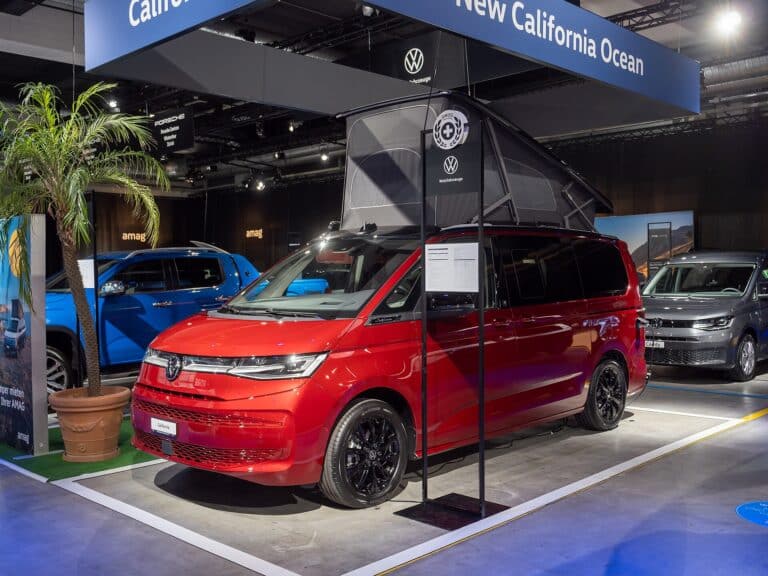
Put the kettle on and brace yourselves. Volkswagen has opened UK orders for the facelifted California, and somewhere out there a man with a 1990s T4 and very strong opinions is probably already typing “not a real VW” into a Facebook group. We love him. We also think he might be aiming at the wrong van, and we have the receipts.
Here is what is actually new on the California, what it costs, and the bit everyone is arguing about: which new VW is the Ford one.
The headline facts
UK order books for the updated California opened on 4 November 2026, with first deliveries expected in early 2027. That gives you all winter to explain the purchase to whoever shares your bank account.
- Trims: Beach, Coast and Ocean.
- Engines: a 150 PS 2.0 TDI diesel with a 7-speed DSG and front-wheel drive, or a 245 PS 1.5 eHybrid plug-in hybrid with a 6-speed DSG and 4MOTION all-wheel drive.
- Electric range: up to 52 miles on the eHybrid (WLTP).
- Price: from £66,334 on the road for the Beach TDI. The Beach eHybrid starts at £74,637, and the range tops out at £87,970.
- Business prices (excluding VAT): Beach from £54,065, Coast from £58,340 and Ocean from £65,255 with the TDI.
- Sleeping: up to four in every trim. Beach seats up to five, Coast and Ocean seat four.
Every one comes with VW’s 5 Plus Promise, which covers five services, the first three MOTs, a five-year warranty and five years of roadside assistance. Terms and limits apply, so read the small print before you plan a lap of Europe on the strength of it.
So what has actually changed?
This is a facelift, not a new generation, so think new haircut rather than new head. The main changes are:
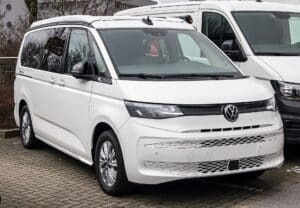
- A new face. The front end has been restyled below the bonnet with larger LED headlights. Ocean gets IQ.LIGHT LED matrix lights.
- Power doors. Both sliding doors and the tailgate are now power-latching, and Ocean gets a fully powered tailgate. No more slamming the door hard enough to wake the campsite.
- Bigger screens. A 12.9-inch infotainment screen, which also handles camping functions, sits alongside a 10-inch digital driver display.
- Faster charging for your gadgets. 25 W wireless charging and 60 W USB-C, so the kids’ tablets will survive the M6.
- A parked climate system on the eHybrid. The eHybrid 4MOTION gets electric stationary air conditioning that can cool, ventilate or heat the van for up to eight hours while it is charging, parked or being used as a camper.
- Smarter driver assistance. The latest Travel Assist adds assisted lane changes on motorways and, for the first time, traffic light recognition. Emergency Assist can guide the van to the hard shoulder or outside lane if the driver has a medical emergency. In the UK, Travel Assist sits in the optional Advanced Assistance Pack.
- New colours. There are now 19 paint choices, including new two-tone combinations, plus 17 to 19-inch wheel designs.
Every trim keeps the pop-up roof, an awning and a parking heater, plus a table and two chairs that live in the tailgate. Beach gets a slide-out single-burner gas cooker at the back, while Coast and Ocean get a proper fitted kitchen with a hob, sink and cool box. If you want the full spec, VW’s California page has the lot.
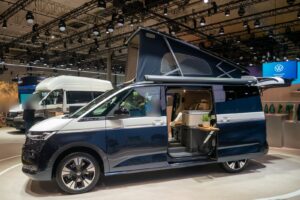
Is it a Ford? The California vs the new Transporter
Right, purists, gather round. You have been told VW sold out to Ford, and that every new VW van now has a Ford engine with a wet belt. Half of that is true. It just isn’t true about the California.
The new Transporter: the one with Ford in it
- What it is based on: the new Transporter is twinned with the Ford Transit Custom, developed as part of the Ford and VW partnership.
- Who builds it: Ford Otosan, at its factory in Turkey.
- Engines: Ford-sourced 2.0-litre diesels with about 108, 148 or 168 bhp, wearing VW TDI badges. There is also an all-electric e-Transporter and a plug-in hybrid.
- The wet belt: Ford’s 2.0 EcoBlue diesel, used in the Transit Custom, runs its timing belt in oil. In 2024 Ford cut the replacement interval for that belt to six years or 100,000 miles. If the wet belt is your thing to moan about, this is the van it applies to.
- What it is for: it is a working van first, built for trades, fleets and convertors.
People call it the T7, but VW hasn’t officially given it that name. To make life even more confusing, plenty of people already call the Multivan the T7. Nobody said being a VW fan would be easy.
The California: no Ford in sight
- What it is based on: the long-wheelbase Multivan, on VW’s own MQB platform, the same family of parts used under a lot of VW Group cars.
- The Ford connection: there isn’t one. The California is the first one that isn’t based on the Transporter at all.
- Engines: the 150 PS 2.0 TDI, or the eHybrid built around VW’s 1.5 TSI evo2 petrol engine.
- What it is for: a daily driver that turns into a camper at the weekend, with a factory fit-out from VW.
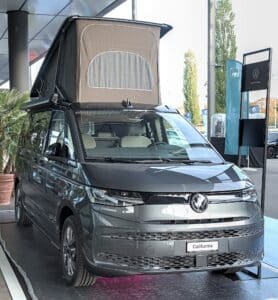
So when someone in the comments says the new California is “just a Transit with a VW badge”, you can gently point them at the Transporter. Then step back and enjoy the silence while they check.
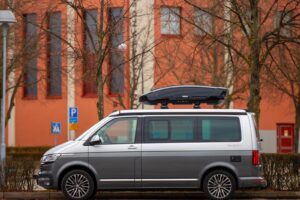
Purists have said this about every new VW camper
Here’s the thing. Every new VW van has been “the end of VW” to someone, and every one of them ended up a classic.
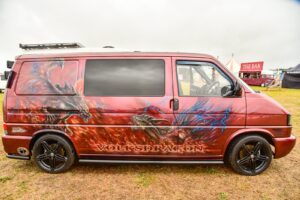
- T4, 1990. VW moved the engine to the front and drove the front wheels after 40 years of rear engines. Proper outrage. Today, T4 owners are the purists, and they are the ones going to shows with immaculate paintwork.
- T5, 2003. Too modern and too comfortable, apparently. Now people are hunting down good ones, and we even wrote a guide to buying a VW T5.
- T6, 2015, and T6.1, 2019. Too many screens, too many gadgets. Now they’re the ones everyone wants on their driveway.
- The new California. Not based on a Transporter. Well, the purists are right about that one. It just isn’t a Ford either.
Give it ten years and someone will be lowering one, fitting dub wheels and telling the next generation that this California was “the last proper one”.
Our honest take
Is it a lot of money? Yes. The starting price is enough to make your wallet go and lie down in the pop-top. Is it a proper VW? Also yes. It’s built on VW’s own platform, it keeps the pop-up roof and it now has a sliding door on each side. The eHybrid’s parked climate system will interest anyone who camps out of season, and the power doors will make anyone with a bad back very happy.
If you’re more of an electric person, we looked at whether prices are coming down in our post on whether the ID. Buzz could get cheaper. And if you are a purist reading this through gritted teeth, we love you, your T4 is gorgeous, and there’s room for both of you on the field.
FAQ
When can I order the facelifted VW California in the UK?
Now. UK orders opened on 4 November 2026, with first deliveries expected in early 2027.
How much is the new VW California?
It starts at £66,334 on the road for the Beach 150 PS TDI. The Beach eHybrid starts at £74,637, and the range tops out at £87,970. Options and paint add to that.
Is the new VW California built by Ford?
No. The California is based on the long-wheelbase Multivan and VW’s MQB platform. The Ford-based van is the new Transporter, which is twinned with the Ford Transit Custom and built by Ford Otosan in Turkey.
Does the new California have a wet belt?
The wet belt story is about Ford’s 2.0 EcoBlue diesel, which the new Transporter shares with the Transit Custom. The California doesn’t use Ford engines. Its engines are a 2.0 TDI diesel and the 1.5 eHybrid. Your VW dealer can tell you the cambelt schedule for your exact engine.
Will it fit in a multi-storey car park?
VW says it stays under 2.0 m tall, even with the awning. That gets it under plenty of multi-storey barriers, but not all, so always check the height sign before you drive in.
Bring it to Dubbed Out 2027
Brand new California, battle-scarred T4 or a split screen held together with love, there’s room on the field for all of them. Dubbed Out 2027 runs from 29 July to 1 August at Royal Cheshire Showground. Tickets go on sale on 31 January 2027, and newsletter subscribers hear first. Sign up to the newsletter at dubbedoutfestival.co.uk.