

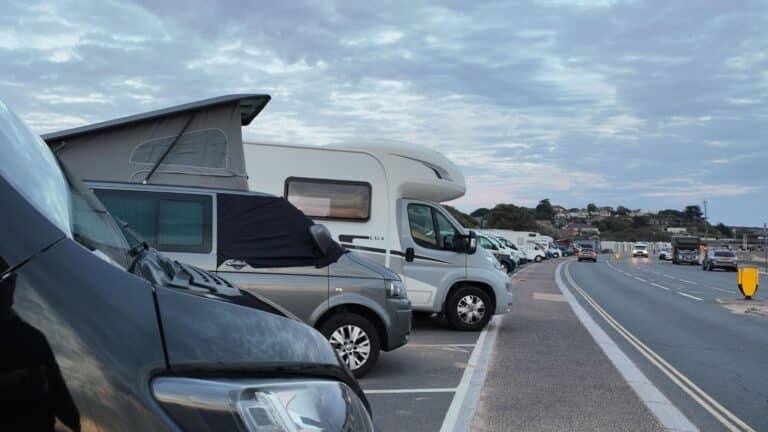
Campervan or motorhome? It is one of those questions that sounds simple until you start shopping. One person wants a VW Transporter with a pop-top. Another wants a proper shower and a fixed bed. Someone else reckons anything with a kettle counts as a motorhome.
There is no shortage of opinions, but the choice comes down to how you will use it. Do you want a weekend van that can also handle the weekly shop? Or do you want more living space for longer trips?
Before you start measuring cupboards and arguing about where the dog will sleep, there is something worth knowing. Campervan and motorhome are not two separate legal categories in the UK.
What’s the difference between a campervan and a motorhome?
In everyday British language, a campervan is usually a van converted or built so you can live in the original body. Think VW Transporter or California, with somewhere to sleep, sit, cook and stash the camping gear.
A motorhome is often a larger vehicle with a coachbuilt living area attached to a chassis. It may offer more room to move around, a fixed bed, a separate washroom and more kit for longer trips.
That is the everyday distinction, not a legal dividing line. Official UK rules generally use the term motor caravan. A compact VW campervan and a larger coachbuilt motorhome can both fall within that definition.
Under the Road Vehicles (Construction and Use) Regulations 1986, a motor caravan has a specific meaning. It is a motor vehicle constructed or adapted for the carriage of passengers and their effects. It must also contain permanently installed equipment that is reasonably necessary to provide mobile living accommodation.
So a Transporter does not need to grow an enormous fibreglass body to qualify. Equally, chucking a mattress in a work van does not automatically make it a motor caravan.
Bottom line: Campervan and motorhome describe the style of vehicle in everyday conversation. For legal purposes, the construction, weight and registration details matter much more.
Is a VW California a campervan or a motorhome?
A VW California is generally described as a campervan because it is a factory-built, van-based camping vehicle. It uses the original van-style body rather than a large coachbuilt living compartment.
That does not stop it being a motor caravan for legal purposes if it meets the definition. The word California does not create its own special category for driving licences, road tax or speed limits.
It is a useful example of why the everyday names can be confusing. You can call your California a campervan. Your friend can call it a motorhome. Neither description automatically settles the legal questions.
If you are considering one, our used VW California buying guide is a good place to continue.
Bottom line: A California is commonly called a campervan, but the legal rules depend on the vehicle’s actual details, not the badge.
Which is easier to drive and park in the UK?
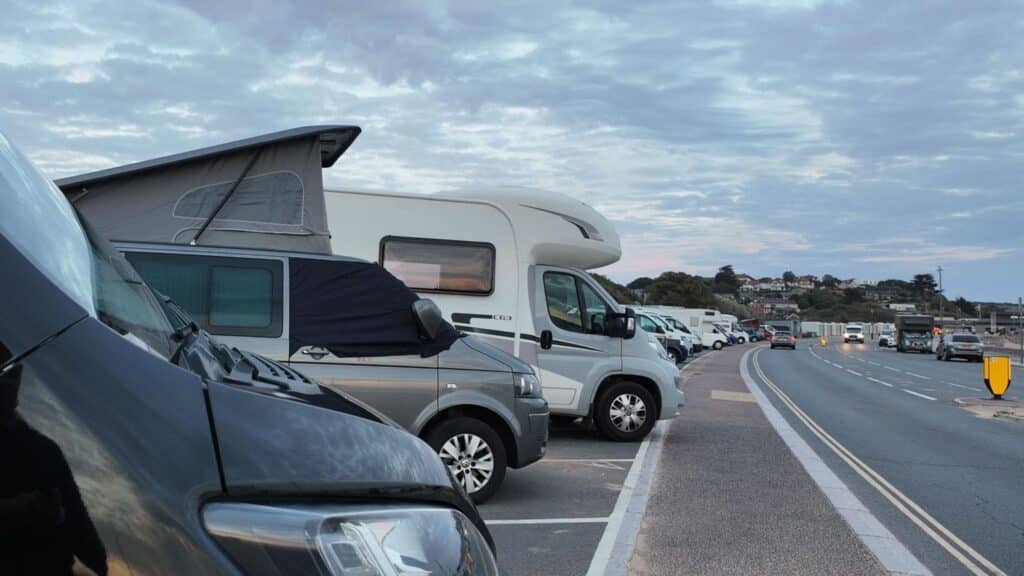
For many owners, this is where a compact VW campervan starts to make sense. A Transporter-sized camper is closer to a large van than a big coachbuilt motorhome. That can make it more manageable on narrower roads, in towns and during everyday driving.
That does not mean every campervan will fit every parking space. Roof racks, pop-tops, long-wheelbase conversions and other additions can change the dimensions. Height barriers have no interest in how much you love your VW.
A larger motorhome may need more planning when you choose car parks, negotiate tight entrances or find somewhere to keep it at home. In return, you may get a more spacious living area once you have parked up.
These are practical comparisons, not legal rules. Always check the actual height, width and length of the vehicle you are considering, rather than relying on a general description.
Family, beds, toilets and payload
For families, start with the practical questions. How many proper belted travelling seats are there? Where will everyone sleep? Can you still use the living area when the beds are made up? And where does all the kit go?
Count seatbelts, not cushions. A lovely rear bench does not automatically mean you can legally carry extra passengers.
Seats and sleeping space
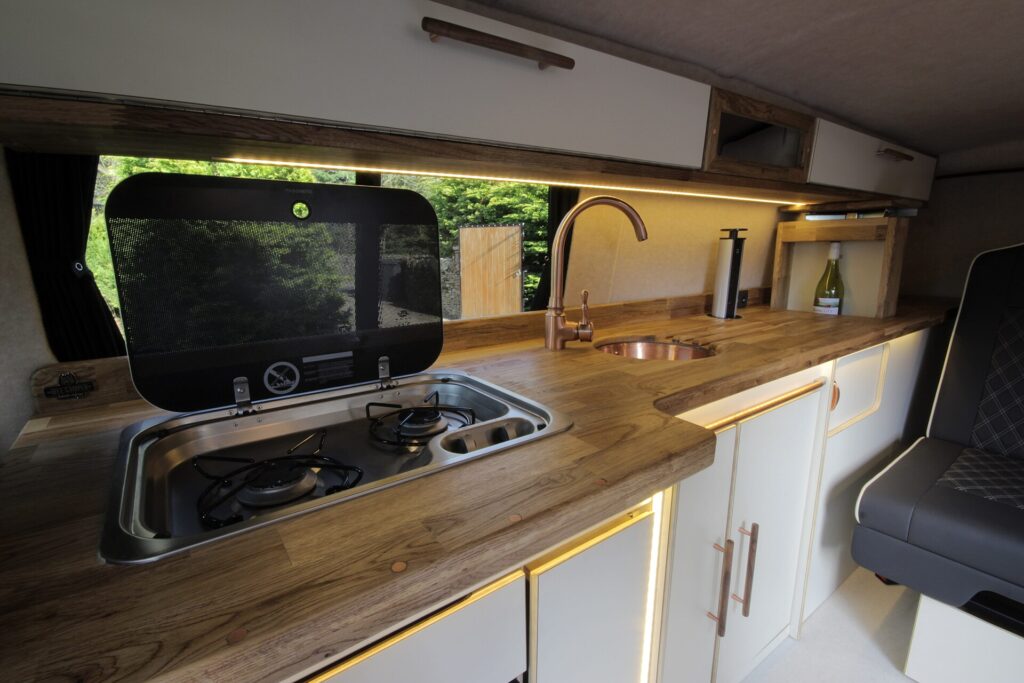
Compact VW campers often make excellent use of limited space, with convertible seating, folding beds and sometimes a pop-top sleeping area. The compromise is that you may need to rearrange the interior when it is time for bed.
A larger motorhome can offer more permanent sleeping arrangements and more room to move around. That can be particularly appealing on longer trips, or when the weather keeps everyone indoors.
We have explored the different layouts in our campervan beds guide.
Toilets, showers and storage
Some compact VW campers use a portable toilet or rely on campsite facilities. Others have a more substantial washroom. It is not true that campervans never have toilets.
Many larger coachbuilt motorhomes include a separate toilet and shower, which can make longer, more self-contained trips easier. Those facilities also occupy space and add weight, and they still need cleaning and emptying.
If you mostly stay on campsites with good facilities, a full washroom might not be essential. If you prefer longer trips with fewer stops, it could be near the top of your list.
Payload matters in both
More equipment does not automatically mean more usable carrying capacity. Furniture, water tanks, appliances and conversion materials all add weight, leaving less capacity for passengers and luggage.
In plain English, payload is the maximum authorised mass (MAM) minus the unladen weight. The DVLA explains that installed equipment increases unladen weight and reduces payload. That matters whether you buy a compact campervan or a much larger motorhome.
Check the manufacturer’s weight information and use a weighbridge where you can. Our campervan payload guide explains the calculations. Our VW Transporter weight plate guide helps you read the figures on the van.
Bottom line: Choose a layout that works for the people and equipment you will actually carry, not just one that looks brilliant in a showroom.
Licence, speed limits and road tax
Here is where the everyday campervan-versus-motorhome distinction can become misleading. UK rules do not simply give you one set of limits for a campervan and another for a motorhome.
Driving licence
For a typical petrol or diesel vehicle, a full category B driving licence usually covers a maximum authorised mass (MAM) of up to 3,500kg. That also usually allows up to 8 passenger seats.
Heavier vehicles may need category C1 (3,500kg to 7,500kg) or category C (over 3,500kg). The important figure is the plated MAM, not whether the seller calls it a campervan or a motorhome.
Read our full guide: Do I need a special licence to drive a campervan?
Speed limits
National speed limits depend on the vehicle’s legal category and, for motor caravans, its maximum unladen weight. A goods van and a qualifying motor caravan can have different limits, even if they started life as similar vehicles.
The relevant motor caravan threshold is 3.05 tonnes maximum unladen weight. That is not the same as the 3,500kg licence figure.
We have covered the details in our UK campervan speed limits guide, including the full tables and DVLA guidance.
Road tax: the surprising comparison
Is road tax cheaper on a campervan than a motorhome? Not necessarily. This is one of those subjects where the actual figures can surprise people.
Road tax depends on how the vehicle is recorded, and on details such as revenue weight and, for many motor caravans, engine size. The following examples come from the GOV.UK tables checked on 18 November 2026.
| Vehicle and tax category | 12-month single payment |
|---|---|
| Light goods van, registered on or after 1 March 2001, not over 3,500kg | £360 |
| Motor caravan, 3,500kg or less, engine not over 1,549cc | £230 |
| Motor caravan, 3,500kg or less, engine over 1,549cc | £375 |
| Motor caravan, over 3,500kg, private heavy goods category | £177 |
Notice something? Using those rates, a light goods van paying £360 could instead pay £375 as a motor caravan. That happens if it is recorded in that class and has an engine over 1,549cc. That is £15 more, not a saving.
So do not assume that changing the V5C to motor caravan automatically reduces your tax. There are also special rules for certain M1SP motorhomes registered between 1 April 2017 and 11 March 2020. CO2-based rates may apply if the emissions figure is on the type approval certificate. If you are not sure whether that exception applies, check with a dealer. Use the live GOV.UK tables rather than guessing the figure.
Rates change, so check the current GOV.UK light goods vehicle tax tables and motorhome tax tables before you decide.
For questions about changing a converted van’s recorded body type, see our DVLA motor caravan reclassification guide. The DVLA also explains that the body type recorded on a V5C is used for appearance and identification. It should not, by itself, determine speed limits or other legislative requirements.
Bottom line: Check the plated weight, legal classification and tax records of the actual vehicle. Do not make financial or legal assumptions based on what the brochure calls it. This article is general information, not formal legal advice.
Insurance and living arrangements
You might buy a factory-built California, a professionally converted Transporter or a self-build campervan. In each case, you need insurance that reflects the vehicle and how you use it.
Tell the insurer about relevant conversions and modifications, and make sure the cover matches your circumstances. The right policy depends on the vehicle and the insurer’s terms. There is not one universal answer for every campervan or motorhome.
Our campervan insurance guide explains what to consider when comparing self-build, professional and factory conversions.
Think about how you will actually live in the vehicle, too. Do you want a quick overnight stop, a weekend on a campsite, or a longer journey where you spend more time inside? Those answers will shape the layout and facilities you need far more than the name on the log book.
Daily driving versus longer trips
One of the strongest arguments for a Transporter-sized campervan is that it can serve more than one purpose. Many owners use theirs for everyday journeys as well as holidays, camping weekends and festivals.
There is a trade-off, of course. A compact camper may be easier to live with on ordinary roads, but it usually offers less living space than a large coachbuilt motorhome. You may find yourself moving bags, converting beds and negotiating whose turn it is to climb over whom in the night.
A larger motorhome can feel more comfortable when you are parked up for several days. More permanent facilities and extra living space may suit longer journeys, particularly if you prefer to be self-contained.
On the other hand, a larger vehicle can be less convenient for shopping trips, tight parking spaces and narrow routes. Neither choice is automatically better. You are deciding which compromises will bother you least.

Which should a first-time VW buyer choose?
If this is your first leisure vehicle, start with the trips you are genuinely likely to take, rather than the adventures you might have in five years.
A campervan could suit you if:
- You want a vehicle that can double as everyday transport.
- Most of your trips are weekends, festivals or shorter holidays.
- You prefer something closer to van size for driving and parking.
- You are happy with a compact living area and a flexible layout.
- You enjoy the VW campervan community and the range of conversion options.
A larger motorhome could suit you if:
- You want more permanent living and sleeping arrangements.
- A built-in toilet and shower are high priorities.
- You plan longer journeys and expect to spend more time inside.
- You are comfortable driving, parking and storing a larger vehicle.
- You are prepared to trade everyday convenience for additional living space.
Neither list is a guarantee. Individual vehicles vary enormously, and the best layout is the one that works for your passengers, belongings and travelling habits.
If possible, hire or borrow a suitable vehicle before buying. A weekend using the bed, kitchen and storage can teach you more about your preferences than hours spent looking at photographs.
For more help, read our first campervan buying and costs guide. If you have settled on a Transporter, our VW T6 buying guide is another useful starting point.
Frequently asked questions
1. What is the difference between a campervan and a motorhome?
A campervan is usually a van-based vehicle with living accommodation inside the original body. A motorhome is often larger, with a coachbuilt living area. These are everyday descriptions, not two separate UK legal classes. Both may qualify as motor caravans.
2. Is a VW California a campervan or a motorhome?
It is normally called a campervan because it is a factory-built van conversion. It can also meet the legal definition of a motor caravan. Its name alone does not determine its tax, licence or speed limits.
3. Does converting a van turn it into a motorhome?
Not automatically. A converted Transporter is still commonly called a campervan. Whether it qualifies as a motor caravan depends on its construction and facilities. Some administrative rules also depend on how it is recorded with the DVLA.
4. Which is easier to drive and park in the UK?
A Transporter-sized campervan is often more manageable than a large coachbuilt motorhome, particularly in towns and tighter spaces. That is practical guidance, not a legal rule. Always check the dimensions of the individual vehicle.
5. Which is better for a family?
It depends on the number of belted seats, sleeping arrangements, storage and available payload. A larger motorhome may offer more living space on longer trips. A compact VW is often easier for weekend getaways. Count the seatbelts, not the cushions.
6. Do I need a different licence for a motorhome?
The licence follows the plated maximum authorised mass, not the word campervan or motorhome. A full category B car licence usually covers a petrol or diesel vehicle up to 3,500kg MAM, with up to 8 passenger seats. Heavier vehicles can need category C1 or C.
7. Are the speed limits different?
Speed limits depend on whether the vehicle is a goods van or a motor caravan, and on unladen weight for motor caravans, not on the brochure name. See our UK campervan speed limits guide for the full tables.
8. Is road tax cheaper on a campervan than a motorhome?
Not necessarily, and not just because of the name. On the GOV.UK tables checked on 18 November 2026, a light goods van registered on or after 1 March 2001, and not over 3,500kg, is £360 for 12 months. A motor caravan at or under 3,500kg is £230 if the engine is not over 1,549cc, or £375 if it is over that. A motor caravan over 3,500kg is £177. A typical diesel Transporter, with an engine over 1,549cc, can pay slightly more as a motor caravan than as a van. Check the live GOV.UK tables, because rates can change.
9. Is the insurance different?
You need cover that matches how the vehicle is used and built, including whether it is a self-build or a professional or factory conversion. Do not assume the premium from a quote for a different type of vehicle will apply. Our campervan insurance guide explains the difference.
10. Can I use a campervan as a daily driver?
Many VW Transporter and California owners do, because the vehicle is still van-sized. A large coachbuilt motorhome is usually less practical for everyday roads, car parks and height barriers. That is practical guidance, not a law.
11. Which has more payload?
Payload is the difference between unladen weight and maximum authorised mass. More furniture, water, washrooms and conversion kit can leave less payload, in a campervan or a motorhome. Check the plate and, if you can, a weighbridge. Our payload guide explains how.
12. Which should I buy first, a campervan or a motorhome?
If you want something closer to a daily van, or a VW you can live with on ordinary UK roads, start with a campervan. Read the buying guides first. If you want more living space, a fixed washroom and longer self-contained trips, a motorhome may suit you better. You will need to be happy with a larger vehicle. Hire or borrow first if you can.
Bottom line
Campervan and motorhome are useful everyday words, but they are not two separate legal classes in the UK. Official rules usually talk about a motor caravan, and then about weight, construction and how the vehicle is recorded.
Pick the layout you will actually live with. Then check the plate, the licence, the tax class and the insurance, rather than trusting the brochure.
Join the Dubbed Out community
Dubbed Out 2027 is at the Royal Cheshire Showground, Knutsford, from 29 July to 1 August 2027. Tickets go on sale on 31 January 2027 via Ticket Tent. For a heads-up when the early release opens, join the email list at dubbedoutfestival.co.uk. Or come and talk vans in the Dubbed Out VW Community on Facebook.
