

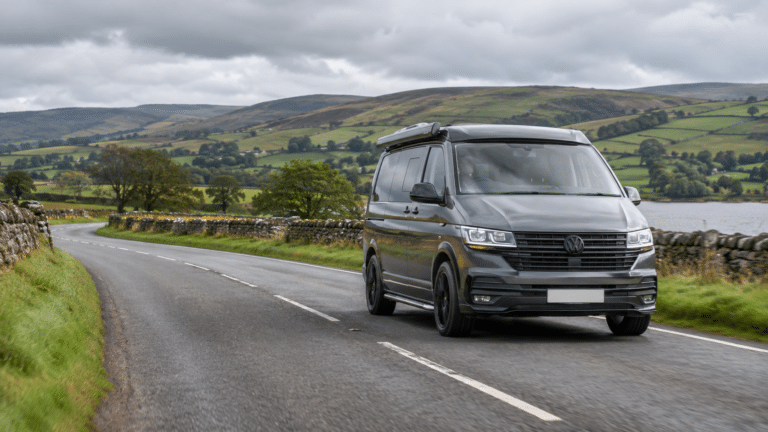
You’ve spent thousands turning your VW Transporter into a campervan. It’s got a bed, a cooker, cupboards and probably more gadgets than your house. But can you legally drive it at 70mph on a dual carriageway?
Ask that question in a campervan Facebook group and you’ll get 50 different answers, three arguments about the DVLA and someone insisting their mate’s brother is a traffic officer. The actual rules are easier to understand once you know what your vehicle legally counts as and what it weighs. And no, the magic number isn’t necessarily 3,500kg.
Do campervans have lower speed limits than cars?
Not necessarily. Some campervans have exactly the same national speed limits as cars. Others must follow lower limits on single and dual carriageways. The difference comes down to whether the vehicle is a goods van or a motor caravan, and its weight where relevant.
- Goods vans: Generally 50mph on single carriageways, 60mph on dual carriageways and 70mph on motorways, for goods vehicles not exceeding 7.5 tonnes maximum laden weight.
- Motor caravans with a maximum unladen weight of 3.05 tonnes or less: 60mph on single carriageways, 70mph on dual carriageways and 70mph on motorways.
- Motor caravans over 3.05 tonnes maximum unladen weight: 50mph on single carriageways, 60mph on dual carriageways and 70mph on motorways.
These are national limits. Posted speed limits, temporary restrictions and variable motorway signs still apply. Putting a bed in a van doesn’t automatically give it car speed limits.
Campervan speed limits UK: the limits at a glance
Here’s the useful bit to bookmark before your next road trip.
| Vehicle type | Single carriageway | Dual carriageway | Motorway |
|---|---|---|---|
| Car, car-derived van or qualifying dual-purpose vehicle | 60mph | 70mph | 70mph |
| Goods van, up to 7.5 tonnes maximum laden weight | 50mph | 60mph | 70mph* |
| Motor caravan, maximum unladen weight 3.05 tonnes or less | 60mph | 70mph | 70mph |
| Motor caravan, maximum unladen weight over 3.05 tonnes | 50mph | 60mph | 70mph |
| Motor caravan towing one trailer | 50mph | 60mph | 60mph |
*For goods vehicles in this category, the motorway limit is 60mph if articulated or towing a trailer.
Built-up areas: The usual limit on qualifying roads with street lights is 30mph in England, Scotland and Northern Ireland, or 20mph in Wales, unless signs indicate otherwise. Local restrictions may differ.
Sources: GOV.UK national speed limits and Schedule 6 of the Road Traffic Regulation Act 1984.
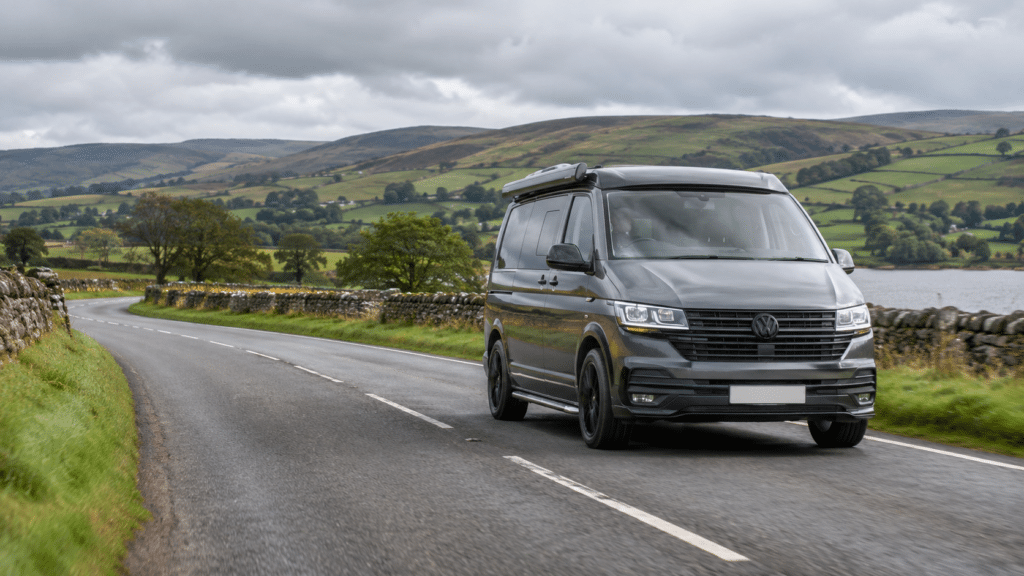
Remember, a speed limit is a maximum, not a target. A fully loaded campervan on a wet country road isn’t the place to discover how quickly your cupboards can empty themselves.
Van limits versus motor caravan limits
Two VW Transporters can look almost identical but have different national speed limits. One might still be a goods van, while the other has been converted into a motor caravan. On a national-speed-limit dual carriageway, the goods van may be limited to 60mph while the qualifying lighter motor caravan can travel at up to 70mph. It’s the vehicle’s legal classification that matters, not the VW badge or the expensive kitchen cupboards.
Are VW Transporters car-derived vans?
Ordinary VW Transporters are not car-derived vans. Car-derived vans are based on passenger cars and must meet specific legal requirements, including a maximum laden weight not exceeding two tonnes. Think Ford Fiesta van rather than VW Transporter.
Some vehicles may qualify as dual-purpose vehicles under separate rules, but don’t assume a Kombi or a van with rear seats automatically qualifies. Check the official definitions if you’re unsure.
The 3.05-tonne split: this is not 3,500kg
For motor caravan speed limits, the key threshold is 3.05 tonnes maximum unladen weight, or 3,050kg. That’s different from the familiar 3,500kg figure associated with the usual category B driving licence limit.
Unladen weight is the weight of the vehicle without passengers, goods or other carried items. It includes the body and parts normally used with the vehicle on the road, but excludes fuel under the official definition. Maximum authorised mass (MAM) means the maximum permitted weight including the load. A campervan with a 3,500kg MAM does not automatically weigh 3,500kg unladen.
Converting a van adds weight, too. Permanent furniture, a bed, kitchen and equipment can affect both unladen weight and available payload.
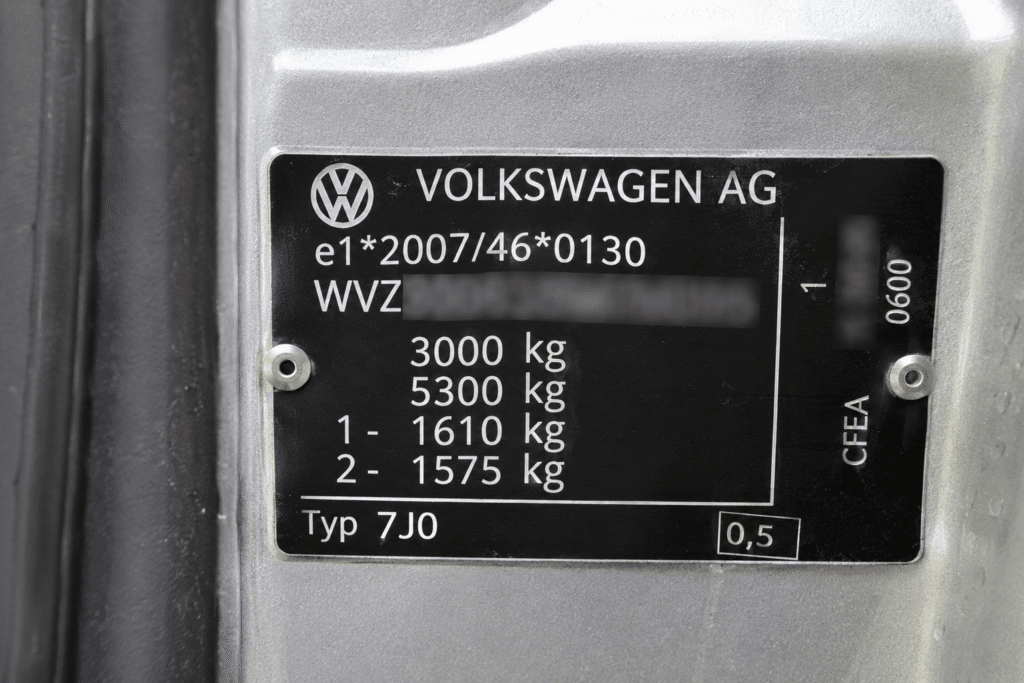
If you’re unsure about your figures, start with the manufacturer’s documentation. A weighbridge can help establish actual weight, but a loaded weighbridge reading is not automatically the legal unladen-weight figure.
Read our campervan payload guide, VW Transporter weight plate guide and the official vehicle weights explanation. Don’t use the 3,500kg licence threshold to decide your motor caravan’s speed limits.
What legally counts as a motor caravan?
You’ve converted your Transporter. It’s got a bed, a cooker, cupboards and somewhere to sit with a brew. But the V5C still says panel van. Does that mean you must follow goods van speed limits? Not automatically.
UK legislation defines a motor caravan by how the vehicle has been constructed or adapted to provide mobile living accommodation, including permanently installed facilities needed for that purpose. DVLA guidance describes the usual internal features as:
- Seats and a table.
- Sleeping accommodation, which may convert from the seats.
- Cooking facilities.
- Storage facilities.
The equipment must be rigidly fixed to the living compartment, although the table may be designed for easy removal.
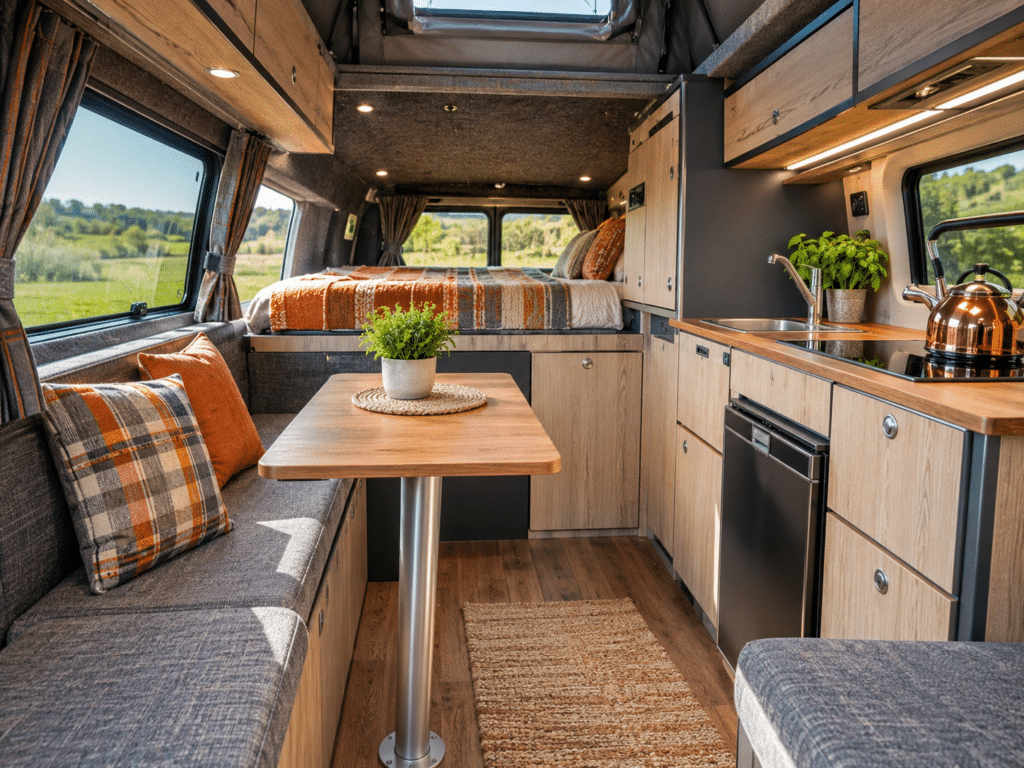
A mattress thrown into the back of a work van doesn’t automatically make it a motor caravan. Neither do fairy lights and an “Adventure Awaits” sticker. Nice try, though. Read the legal definition and DVLA conversion guidance.
Do I have to get the V5C changed first?
DVLA guidance says the recorded body type is used for vehicle appearance and identification, and should not determine speed limits or other legislative requirements. A converted vehicle can still be used as a motor caravan without its recorded body type being changed, provided the keeper is satisfied it meets the required internal features.
That doesn’t guarantee every camera system or police officer will immediately recognise your conversion as a motor caravan. You may need evidence to explain how it qualifies. Separate DVLA requirements for changing the recorded body type, including external features, should not be confused with the legal definition used for speed limits.
We’ve covered that process in our DVLA motor caravan reclassification guide.
Posted speed limits, Wales and local signs
If you’re driving a goods van and see a national speed limit sign on a single carriageway, don’t assume it means 60mph. The sign means the national limit for your vehicle category applies, which is 50mph for many goods vans.
Where a road has a posted numerical speed limit, such as 40mph, 50mph or 60mph, that signed limit generally applies to vehicles covered by it. The lower goods van national-limit figure doesn’t automatically turn a posted 60mph limit into 50mph. Obey any restrictions specifically applying to your vehicle.
What about Wales?
Wales generally has a 20mph default on qualifying built-up roads with street lights unless signs indicate another limit. England, Scotland and Northern Ireland generally use 30mph in equivalent circumstances, although local 20mph restrictions are common. Follow the actual road signs, even if your sat-nav disagrees.
Towing a trailer changes the rules
Taking a trailer with your campervan? Perhaps you’ve run out of room for camping chairs, paddleboards, bikes and the barbecue that was apparently absolutely essential.
For a motor caravan drawing one trailer, the national limits are 50mph on single carriageways, 60mph on dual carriageways and 60mph on motorways.
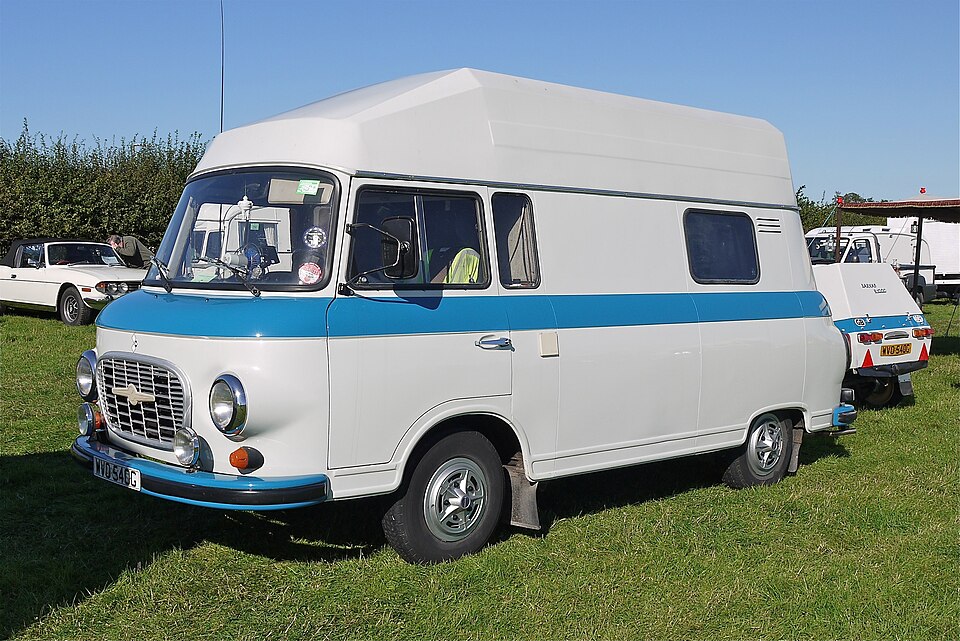
Under Highway Code Rule 265, vehicles drawing trailers must not use the right-hand lane of a motorway with three or more lanes, except in prescribed circumstances. Even if your campervan normally qualifies for car limits, hitching up a trailer changes things.
When a motorhome is treated as a goods vehicle
GOV.UK says motorhomes and motor caravans are classed as goods vehicles for speed-limit purposes if they carry goods for exhibition and sale, are used as a workshop or are used for storage. In those circumstances, goods vehicle speed limits apply. That’s worth remembering if your campervan doubles as a business vehicle.
What if a speed camera tickets you as a van?
Suppose your converted campervan meets the motor caravan requirements, but its V5C still describes it as a van. You drive at a speed you believe is legal for a lighter motor caravan, then receive a speeding notice based on the lower goods van limit.
DVLA guidance supports the distinction between actual construction and recorded body type. However, that doesn’t guarantee an allegation will disappear because you send photographs of your conversion. Gather evidence, check the official guidance and consider specialist legal advice if you believe the wrong classification has been applied. Don’t ignore any official notice.
According to GOV.UK’s speeding penalties guidance, the minimum speeding penalty is £100 and three penalty points. A speed awareness course may be offered in appropriate circumstances. Court fines can reach £1,000, or £2,500 for motorway offences, with more serious consequences possible.
If you’re unsure whether your conversion qualifies, resolve that uncertainty before relying on higher national limits. This article provides general information, not formal legal advice.
Frequently asked questions
Do campervans have lower speed limits than cars in the UK?
Some do. It depends on legal classification and weight. Lighter motor caravans can have car national limits; goods vans and heavier motor caravans generally have lower limits on single and dual carriageways.
Can I drive a campervan at 70mph on a motorway?
Many goods vans and motor caravans have a 70mph national motorway limit. Towing, posted restrictions and vehicle-specific rules may lower it.
Can I do 70mph on a dual carriageway in a campervan?
Yes, if your vehicle qualifies as a motor caravan with maximum unladen weight of 3.05 tonnes or less, or another category with car limits. Goods vans and heavier motor caravans generally have a 60mph national limit.
Why do some campervans have to do 50mph on a single carriageway?
They fall under goods vehicle limits or the heavier motor caravan category, both of which generally have a 50mph national limit on single carriageways.
Does the body type on my V5C decide my speed limit?
No, not by itself. The vehicle’s actual construction and legal classification matter, although its recorded body type can create practical enforcement questions.
Is the 3.05-tonne rule the same as 3,500kg?
No. The 3,050kg figure is the maximum unladen weight threshold for motor caravan speed limits. The 3,500kg figure usually relates to MAM and driving licence entitlement. See our campervan licence guide.
What counts as a motor caravan?
A vehicle constructed or adapted for mobile living accommodation with the legally required permanently installed facilities. DVLA guidance describes seating and a table, sleeping accommodation, cooking facilities and storage.
Must my V5C say motor caravan before I can use car limits?
Not necessarily. DVLA guidance says a vehicle can be used as a motor caravan without a recorded body-type change if it meets the internal requirements. The relevant weight limit must also be satisfied.
What if I’m towing a trailer?
For a motor caravan drawing one trailer, national limits are 50mph on single carriageways and 60mph on dual carriageways and motorways. Motorway lane restrictions also apply.
What is the built-up-area limit in Wales?
Generally 20mph on qualifying roads with street lights, unless signs indicate otherwise. The usual equivalent default elsewhere in the UK is 30mph, subject to local restrictions.
If a sign says 60, can a van do 60?
Generally yes, where 60mph is a posted numerical limit applying to that vehicle. The lower goods van figures concern roads where the national speed limit applies. Follow any vehicle-specific restrictions.
What if I get a speeding ticket in a converted van?
The minimum penalty is £100 and three points. If you believe the wrong classification was used, you can dispute the allegation, but success isn’t guaranteed. Respond to official notices within their deadlines.
Bottom line: know your campervan before you put your foot down
Campervan speed limits aren’t decided by a VW badge, a pop-top roof or an impressive collection of camping mugs. What matters is legal classification, maximum unladen weight where relevant, and the road you’re on. If you’re unsure, check the official guidance before making assumptions. It’s cheaper than discovering the answer through the post.
And if someone at the campsite insists every campervan has to do 60mph on a dual carriageway, you’ve now got something useful to discuss over a brew.
Join the Dubbed Out community
Love campervans, road trips and the occasional debate about what’s actually legal? That’s exactly the sort of conversation we enjoy at Dubbed Out.
Dubbed Out Festival 2027 takes place at the Royal Cheshire Showground, Knutsford, from 29 July to 1 August 2027. Tickets are scheduled to go on sale on 31 January 2027 through Ticket Tent.
For festival announcements and a heads-up when ticket sales open, join the Dubbed Out Festival newsletter.
Come and join over 70,000 fellow campervan enthusiasts in the Dubbed Out VW Community on Facebook. Whether you drive a Transporter, California, Crafter or something completely different, you’re welcome. Bring your questions, share your adventures and join the conversation.
See you in the fields!
