

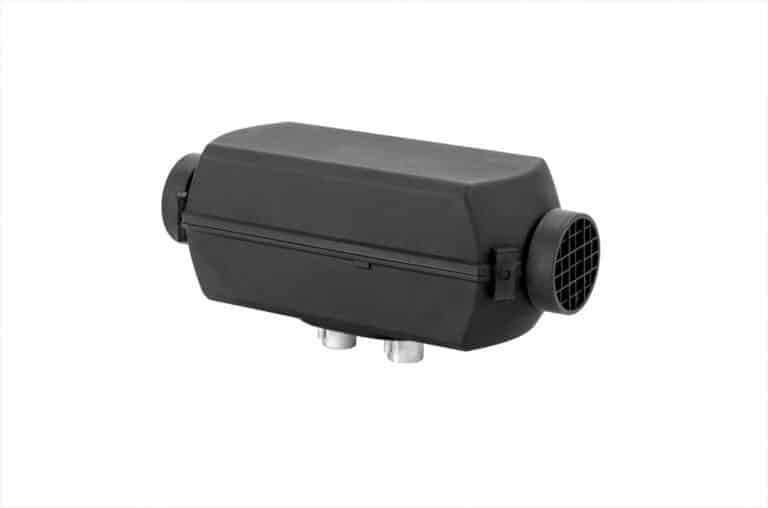
A campervan diesel heater is the closest thing to a cosy living room you can bolt under a van floor. It sips fuel, hums away and turns a frosty field into somewhere you actually want to wake up. This guide covers how they work and who makes them. It also covers the cheaper heaters loads of us run, the running costs and the safety bits that matter. For the bigger picture on cold-weather trips, read our winter campervan camping guide.
What is a campervan diesel heater?
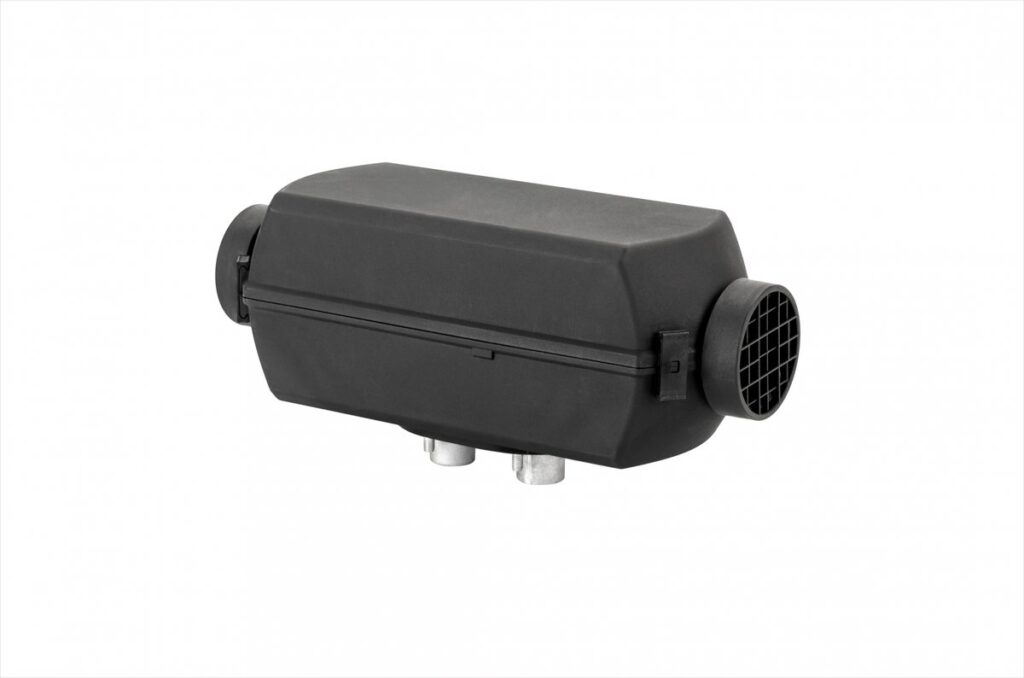
It’s a small burner in a metal case, usually fitted under a seat or below the floor. A pump ticks diesel into a combustion chamber. The flame heats a heat exchanger, and a fan blows warm air into the van. The burning happens in a sealed chamber. It takes its combustion air from outside and sends its exhaust back outside through a pipe under the van.
That’s the clever bit. The air you breathe and the air it burns never mix, as long as it’s fitted properly, you won’t have any problems. And form personal experience, don’t dismiss the cheaper Chinese heaters you can find on Amazon.
Most take fuel from the van’s own tank or a small separate one. They also need a bit of 12V power for the fan and pump.
The main makers
Here are the established names you’ll see in vans and motorhomes, with figures from their own data sheets.
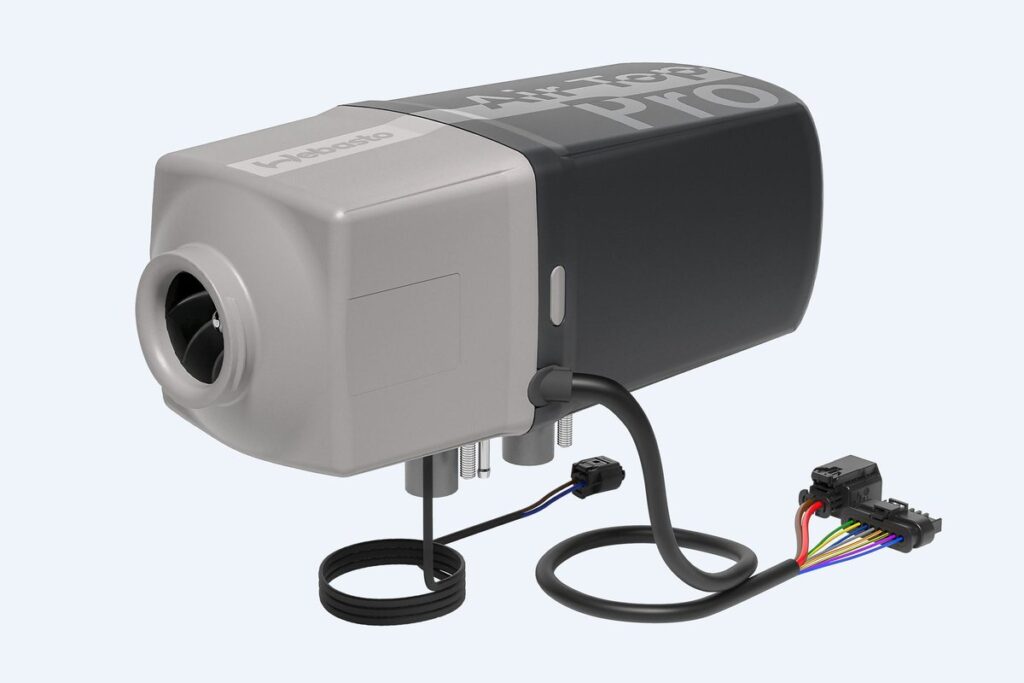
Webasto
Webasto has stopped making the much-loved Air Top 2000 STC and names the Air Top Pro 25 as its successor. Spares for the old one stay available beyond 31 December 2026. The Pro 25 runs from 0.7 to 2.0kW, with a 2.5kW boost for up to six hours. It uses 85 to 305ml of diesel an hour and draws a maximum of 21 watts.
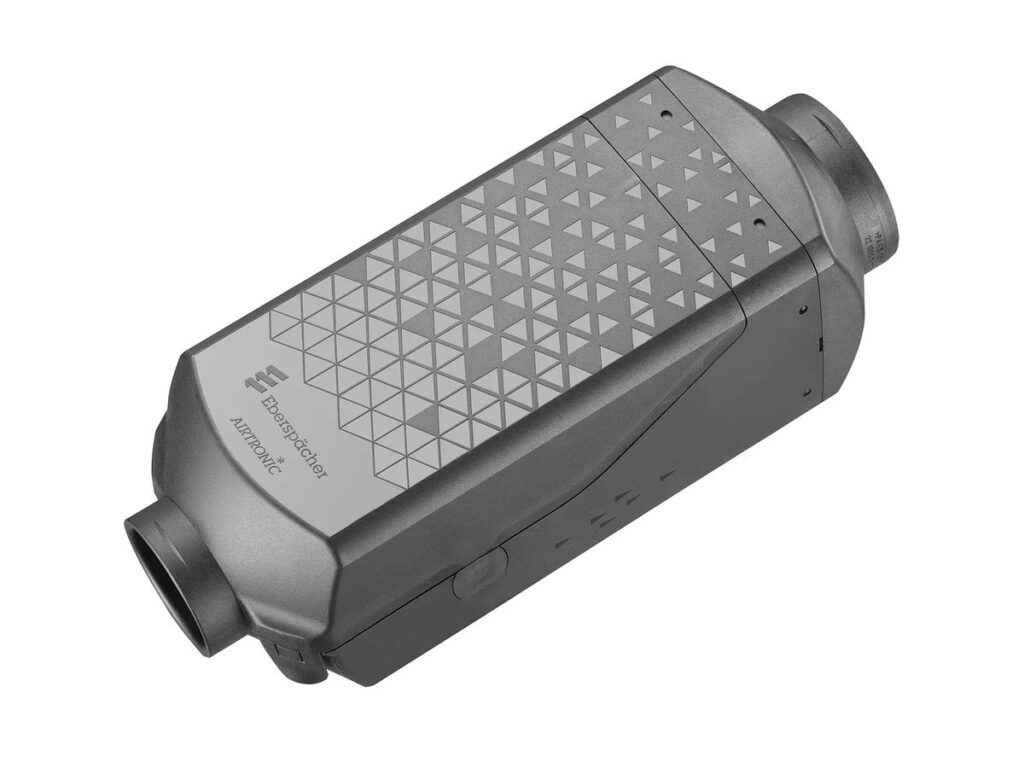
Eberspächer
Eberspächer launched its third-generation Airtronic heaters in 2021. The small one for vans is the Airtronic S3 D2L. It gives 0.85 to 2.2kW, uses 0.1 to 0.27 litres an hour and draws up to 28 watts. Its manual lists camper vans as an intended use.
Autoterm (formerly Planar)
If you know the name Planar, it now goes by Autoterm. The Planar 2D became the Autoterm Air 2D. It puts out 0.8 to 2kW, uses 0.10 to 0.24 litres an hour and draws 10 to 29 watts. Autoterm extends the warranty to three years if a certified Autoterm service registers the fitting.
Truma
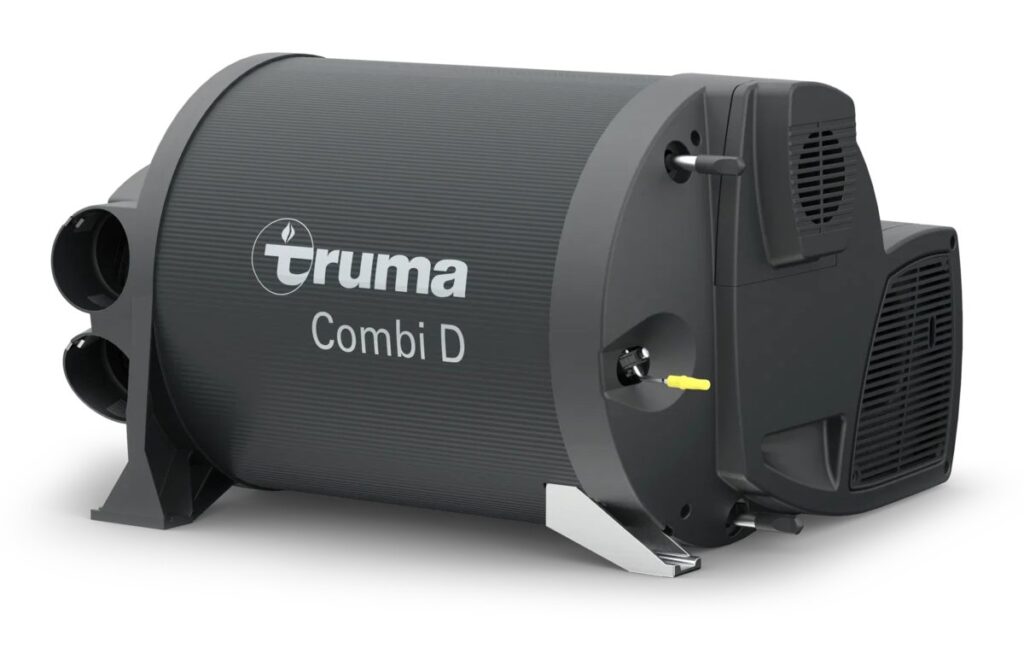
Truma’s Combi D 4 is a different beast. It heats the van and 10 litres of water. Output runs from 1 to 4kW on 0.1 to 0.4 litres an hour. The Combi D 4 E adds electric elements for hook-up. Truma lists a minimum fitting space of 540 x 500 x 350mm, so it suits bigger builds rather than a quick pop-top fit.
What about the cheaper Chinese heaters?
Here’s where we’ll stick our necks out. In our experience, there’s absolutely nothing wrong with the cheaper Chinese diesel heaters. Plenty of the Dubbed Out crowd run them, and they keep vans toasty all weekend. You can get one supplied and fitted for very little, which puts proper heat within reach of almost any build. The money you save can go on a good fitter, decent fittings and a CO alarm.
Owners on forums and self-build blogs tell the same story. They report heaters that warm up fast and work really well. The common tip is to upgrade a few cheap fittings while you’re at it:
- stainless steel hose clips on the exhaust and intake
- a metal turret or mounting plate where it goes through the floor
- heat-proof exhaust sealant or putty around the floor hole
- better fuel line and a decent filter
Buy from a reputable seller who supplies full instructions in English. The UK’s product safety office stresses that diesel heaters need clear safety information and enough ventilation to use safely. That goes for any heater, whatever the badge.
Diesel or HVO?
Normal pump diesel is fine for all of them. Webasto, Eberspächer and Autoterm also list HVO, a paraffinic diesel made to EN 15940, as an approved fuel for these models. Truma lists it for the Combi D too. Check your own heater’s manual before you switch, especially on an older unit.
How much does it cost to run?
Not much. Going by the figures above, a 2kW heater uses roughly 0.1 to 0.3 litres an hour. The UK average diesel price was 198.19p a litre in the government’s latest weekly figures, for 9 November 2026. That works out at about 20p an hour on low and 60p an hour flat out. A full eight-hour night on low uses about 0.8 litres, or roughly £1.60.
What about the battery?
Once it’s running, a 2kW heater draws about 10 to 30 watts. Start-up takes more. Eberspächer quotes up to 90 watts while the S3 D2L starts on 12 volts. Make sure your leisure battery can cope with a cold start and a long night. Our winter guide covers keeping batteries happy in the cold.
Safety basics for any heater
Fit it properly
Eberspächer’s manual is a great checklist, whoever made your heater. The exhaust pipe must end in the open air. Route it so exhaust can’t be drawn back into the heater’s combustion air or into the van. Seal the floor hole so fumes stay outside. Eberspächer says to have its heaters fitted by an authorised service partner. Autoterm gives a longer warranty when a certified service registers the fitting. If you’re not confident, pay someone who is.
Fit a CO alarm
Carbon monoxide has no colour or smell, so you can’t tell if it’s there, says the NHS. Humberside Fire and Rescue says to fit a CO alarm tested to BS EN 50291-2 and Kitemarked. Put it where you sleep and test it before every trip. It could save your life.
Only use heaters built for the job
The fire service is clear: never run a heater inside a van that isn’t designed for that purpose. A fitted diesel heater with its exhaust outside is one thing. A portable heater burning away inside is another.
Servicing and insurance
Book a habitation check once a year. The Approved Workshop Scheme says these test heating and ventilation, plus smoke and CO alarms. A fitted heater also counts as a modification, so tell your insurer. Which? warns that not declaring changes could invalidate your cover. Our campervan insurance guide explains more.
Where to use it
Pick a proper pitch. Our list of UK campsites open all winter is a good start. Not sure where you can legally kip? Read can I sleep in my campervan.
Bottom line
A campervan diesel heater is one of the best upgrades you can make. Webasto, Eberspächer, Autoterm and Truma all make proven kit. In our experience, a cheaper Chinese heater does the job brilliantly for very little money. Whichever you choose, fit it properly, keep the exhaust outside and sealed, fit a CO alarm and tell your insurer. Then enjoy the warmest lie-in of your life.
Warm van sorted? Bring it to the field. Tickets for Dubbed Out 2027 go on sale through Ticket Tent on 31 January 2027, and newsletter sign-ups get early access. Join the newsletter for early tickets.
