

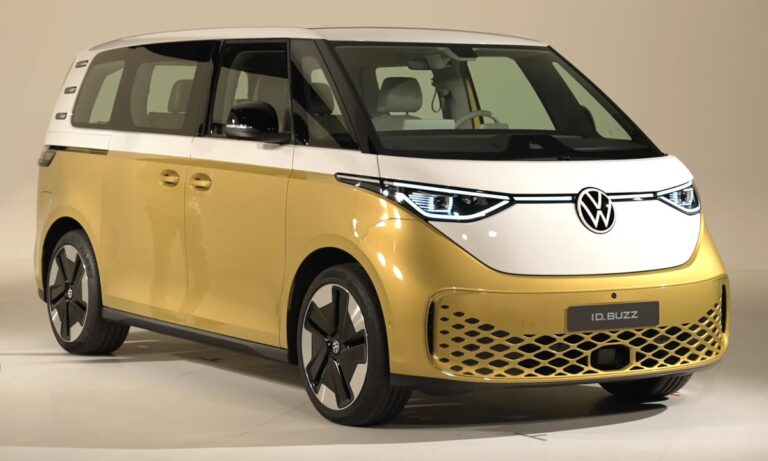
Will the ID. Buzz get cheaper? It is the question we keep hearing from VW fans and families. The van looks the part, but the price puts many people off. Then VW’s boss said the current model is “on the wrong cost base”. Here is what has been confirmed, what has only been hinted and what nobody knows yet. We checked everything below on 24 October 2026.

The short answer
- Confirmed: VW is working on a second-generation ID. Buzz on a new platform.
- Hinted: cheaper batteries could help bring the price down.
- Not announced: a price, a launch date, the range, or a camper version of the new van.
What VW has actually said
Auto Express spoke to VW brand CEO Thomas Schäfer at the 2026 Paris Motor Show and reported it on 12 October 2026. Asked about the ID. Buzz, he said “they’re working on it”. The current four-year-old van gets updates first. Then comes an all-new second-generation ID. Buzz on VW’s Scalable Systems Platform, known as SSP.
Schäfer said today’s van “is on the wrong cost base”, which makes it hard to sell in big numbers. Asked how VW could make the next one cheaper, he hinted that lower-cost lithium iron phosphate (LFP) batteries could play a part. Auto Express adds that SSP should bring more range, faster charging and better software. It could also cut costs because it will sit under lots of VW Group models.
VW gave no date. Auto Express says the first SSP model will be a flagship SUV, due before the end of the decade, and the new Buzz will come some time after that. So the second-generation van looks a fair way off.
What an ID. Buzz costs today
VW UK lists the ID. Buzz from £59,405 including VAT. Its July 2026 price list shows the five-seat Life at £59,405, the Style from £64,637 and the sporty GTX from £68,891. The seven-seat Life, which has a long wheelbase, starts at £59,933. The short wheelbase has a 79kWh battery and the long wheelbase has an 86kWh battery. VW quotes an official (WLTP) range of 251 to 300 miles, depending on the version.

VW UK is also advertising a finance offer: 2.9% APR representative with £6,500 towards your deposit, for orders placed by 5 January 2027. It is subject to status, so read the terms before you get excited.
Cheaper electric options you can buy now
- ID. Buzz Cargo van. VW cut the entry price to £29,995 excluding VAT on 4 August 2026, according to What Car?. That is £5,655 less than before, with a 58kWh battery and 218 miles of official range. It is the work van, not the passenger bus, so it is not a like-for-like swap for a family.
- Kia PV5 Passenger. Kia UK lists the five-seat Essential from £33,195 on the road, or £31,695 after the £1,500 Electric Car Grant. Seven-seat versions start at £36,995 before the grant. Auto Express says it offers a similar amount of space inside, from around £33,000. It is a different van, though, and the cheapest one has a smaller 51.5kWh battery.
Is there an ID. Buzz camper?
Not a full factory camper in the UK yet, but things are moving.
- VW’s Good-Night package. Launched in Germany in June 2026 from €2,600. It adds a bed frame with a two-metre mattress, a folding table and chairs, blackout covers and vent grilles. There is no kitchen and no pop-top. Auto Express says the battery can run the climate control for up to 48 hours.
- The UK. Parkers (updated 8 October 2026) reports that VW UK will not bring the German ID. California Cruise here. It does plan an ID. Buzz with a bed for the UK, with details expected this autumn and the van expected in 2027. No UK name, price or date has been confirmed.
- Converters. Some UK firms convert the ID. Buzz Cargo. One we checked, CCCampers, lists a conversion from £17,999 (you supply the van) and a complete van from £52,995. That is information, not a recommendation, so do your own homework.

A weekend away in an electric Buzz
An electric van can do a weekend trip. It just needs a bit more planning.
- Charging stops. VW says the ID. Buzz can charge at up to 200kW, but you need a charger rated above 200kW to get that. VW says those are limited in the UK, mainly on selected motorways and major routes. Auto Express found a 170kW charger took the battery from 5% to 80% in about half an hour. A full charge from an 11kW three-phase AC supply takes around nine hours.
- Real-world range. Auto Express saw around 200 miles in mixed driving with the smaller battery. The larger-battery seven-seater got closer to 250 miles. VW says temperature, speed and load all change the figure.
- Cold weather. Auto Express recommends paying around £1,000 extra for the heat pump to protect range in winter. VW lists it at £1,062. We have not found a verified winter range figure for the current van, so treat any big number with caution. Planning a cold trip? Our winter campervan camping guide has the practical tips.
- Towing and payload. VW’s July 2026 brochure lists braked towing of 1,200kg on the short-wheelbase Life and Style, and 1,000kg on the long wheelbase. The GTX goes up to 1,800kg. A tow bar is an optional extra at £996. Payload runs from about 380kg to 588kg depending on the version, and that has to cover people and kit.
- Power for your kit. VW’s 2026 update adds vehicle-to-load. It lets you power things like an electric grill or an e-bike charger from the battery, up to 2kW through an adapter.

Weighing up what a campervan really costs, electric or not? Our guide to what your first campervan really costs is a good place to start.
ID. Buzz questions people ask
Will the ID. Buzz get cheaper?
VW’s boss says the current van is on the wrong cost base, and a second-generation ID. Buzz is being worked on. No price has been announced for it. The only cheaper ID. Buzz so far is the Cargo van, from £29,995 excluding VAT.
Is there a cheaper alternative to the ID. Buzz?
The Kia PV5 Passenger starts at £33,195 on the road for the five-seat Essential. It is a different van with a smaller battery on the cheapest version, so compare the specs side by side.
What is the ID. Buzz 2027 release date?
There is no release date for the second-generation ID. Buzz. Auto Express expects it to follow VW’s first SSP model, an SUV due before the end of the decade. VW’s 2026 update for the current van was due to reach UK customers from summer 2026.
Can you buy an ID. Buzz camper in the UK?
Not a factory-built one yet. VW UK plans an ID. Buzz with a bed, but no name, price or date has been confirmed. UK converters offer camper conversions, mainly based on the Cargo van.
How far can an ID. Buzz go on a charge?
VW quotes 251 to 300 miles on the official test. Auto Express saw around 200 to 250 miles in mixed driving, depending on the battery.
Your turn
Would a cheaper ID. Buzz tempt you? What price would make you say yes? And would you take an electric bus away for the weekend, or are you sticking with a classic or a diesel? Tell us in the comments below. You can also join in on our Facebook group or on Instagram at @dubbed_out_community.
Dubbed Out 2027 is Thursday 29 July to Sunday 1 August at the Royal Cheshire Showground. Sign up for news at dubbedoutfestival.co.uk.
Prices and specifications checked on 24 October 2026 and can change. Check with VW or your dealer before you buy. Sources: Auto Express, VW Vans UK, What Car? and Parkers.