Planning the North Coast 500 in a VW Transporter, California, campervan or motorhome?
The NC500 is a spectacular Scottish road trip, but it pays to arrive prepared. You will encounter remote roads, single-track sections, busy summer campsites and parking rules that are easy to misunderstand.
Our updated Dubbed Out NC500 campervan guide covers the route, realistic journey times, places worth stopping, verified campsite options, driving advice and what Scotland’s wild camping rules actually mean for campervans. It draws on information from the official North Coast 500 team, NatureScot’s Scottish Outdoor Access Code, Highland Council and campsite operators.

Information checked on 18 November 2026. Parking restrictions, campsite seasons and road conditions can change; always check signs and operators’ latest instructions before setting off.
NC500 campervan guide: the essentials
- Route: Approximately 516 miles, starting and finishing in Inverness.
- Time to allow: At least five days; seven to ten days is more relaxed, especially with detours.
- Best vehicle: A compact campervan is convenient, but road choice and driver confidence matter more than the badge on the bonnet.
- Overnight stays: Use booked campsites, authorised stopovers or places where parking is expressly permitted. Scottish tent-camping access rights do not extend to motor vehicles.
- Tricky roads: Check the official advice before Bealach na Bà and the B869 Drumbeg Road. Larger motorhomes are advised to take alternative routes.
What is the North Coast 500?
The North Coast 500, usually called the NC500, is a circular scenic touring route around the northern Highlands of Scotland. It begins and ends in Inverness and links the dramatic west coast, the far north and the historic eastern coastline. It is not a race and there is no requirement to complete every mile: the whole point is to explore at your own pace.
Going clockwise, you can explore Wester Ross and the Applecross Peninsula before heading towards Gairloch, Ullapool, Assynt, Durness and the north coast. You then travel towards Caithness and return south through eastern towns and villages such as Wick, Golspie and Dornoch. Travelling anticlockwise is equally valid.
How many days do you need for the NC500?
Five to seven days is a useful minimum, and a week or more makes for a much more enjoyable campervan trip. The official NC500 team recommends at least five days and says seven or more gives you greater opportunity to explore. Single-track roads, wildlife stops and detours mean a short distance can take much longer than a sat-nav suggests.
- Five days: A brisk introduction with carefully chosen stops.
- Seven days: A balanced road trip with time for beaches, villages and a few longer walks.
- Ten days or longer: Better for a relaxed pace, family travel, photography or optional excursions.
Suggested seven-day NC500 campervan itinerary
This is an illustrative clockwise plan, not a promise of driving times or a requirement to use any particular road. Adjust it around your vehicle size, weather and campsite availability.
- Day 1 – Inverness to Wester Ross: Stock up, check the weather and explore the inland approach towards Lochcarron, Applecross or Torridon. Choose a suitable route for your vehicle.
- Day 2 – Torridon, Gairloch and the western coastline: Enjoy mountain scenery, coastal walks and stops around Gairloch and Poolewe.
- Day 3 – Ullapool and Assynt: Explore Ullapool, Lochinver and the beaches around Achmelvich or Clachtoll, allowing extra time for smaller roads.
- Day 4 – Kylesku, Scourie and Durness: Visit north-west Sutherland, stop at viewpoints safely and consider a campsite around Scourie or Durness.
- Day 5 – North coast towards Caithness: Travel via Tongue and the north coast, making time for coastal scenery and villages.
- Day 6 – John O’Groats, Wick and the east coast: Explore Caithness and continue south at a comfortable pace.
- Day 7 – Golspie, Dornoch and Inverness: Stop at Dunrobin Castle if open, then enjoy the eastern Highlands on the return to Inverness.
Prefer to stay two nights in one place? That’s a great way to avoid packing up every morning and to explore more on foot. The official NC500 route guide is a helpful companion when deciding what to include.
The best NC500 stops for campervan travellers
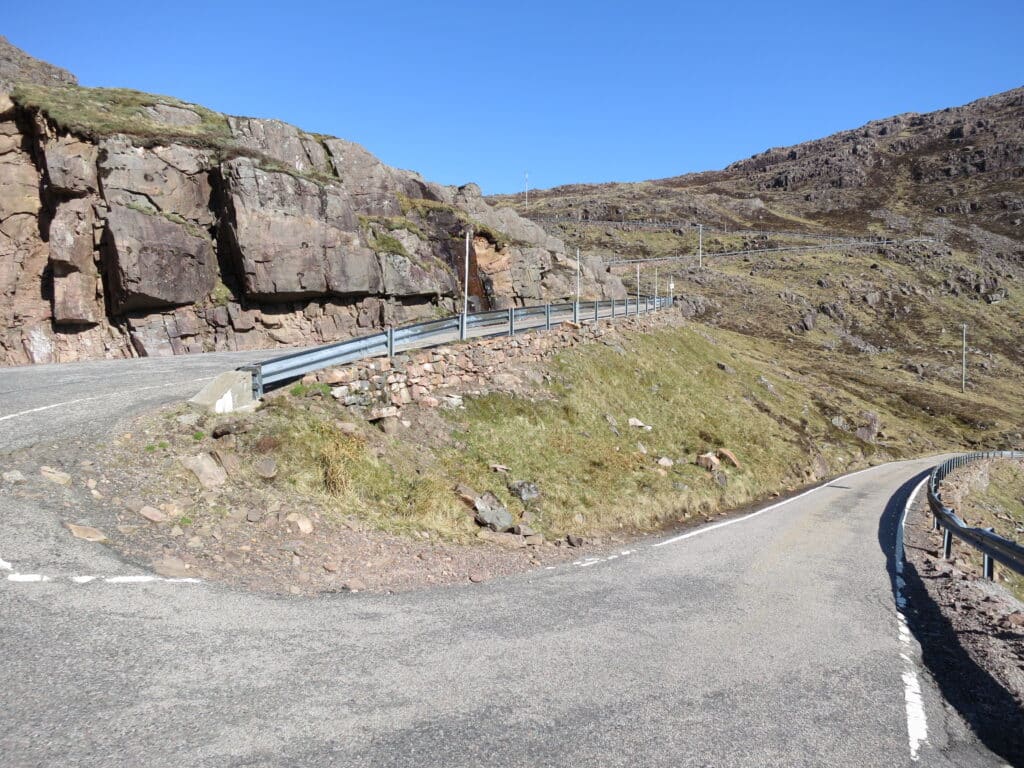
Applecross and the Bealach na Bà
Applecross is a memorable destination for its coastal scenery, mountain views and small-community atmosphere. Many people know it for the Bealach na Bà mountain pass, but the famous road is not suitable for everyone.
Important: The official NC500 guidance advises drivers of motorhomes larger than a standard VW T5-sized conversion to use alternative routes. It specifically tells drivers to avoid Bealach na Bà in unsuitable vehicles and to take the alternative approach via the A832. Sharp bends, steep gradients and narrow sections make this serious advice, not a challenge to prove yourself. Even in a smaller van, only attempt a road if you are comfortable with the conditions and can reverse confidently.

Torridon, Gairloch and the west coast
Wester Ross is one of the great rewards of travelling the NC500: dramatic mountain silhouettes, lochs, rugged coastline and beaches. Take the time to explore towns and villages rather than treating the whole journey as a series of roadside photo stops.
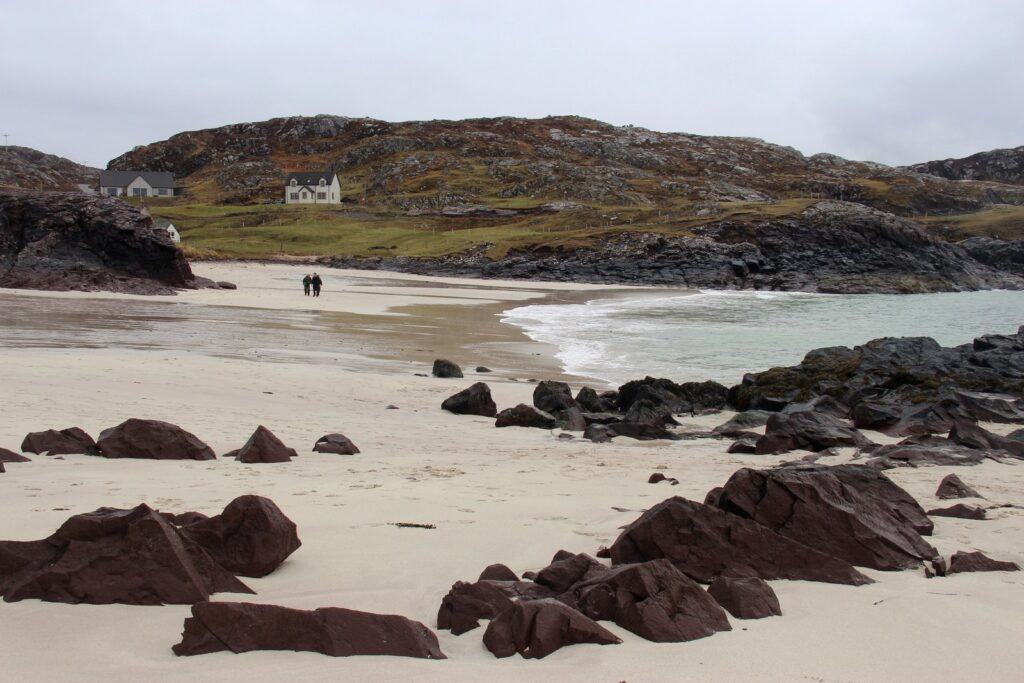
Assynt, Clachtoll and Achmelvich
The Assynt area is known for its striking hills and beautiful beaches. Clachtoll and Achmelvich are rewarding places to spend time, but small access roads and busy parking areas require patience. Do not assume a beach car park permits an overnight stay: check the signs and use local campsites or authorised spaces.
Durness, the north coast and Caithness
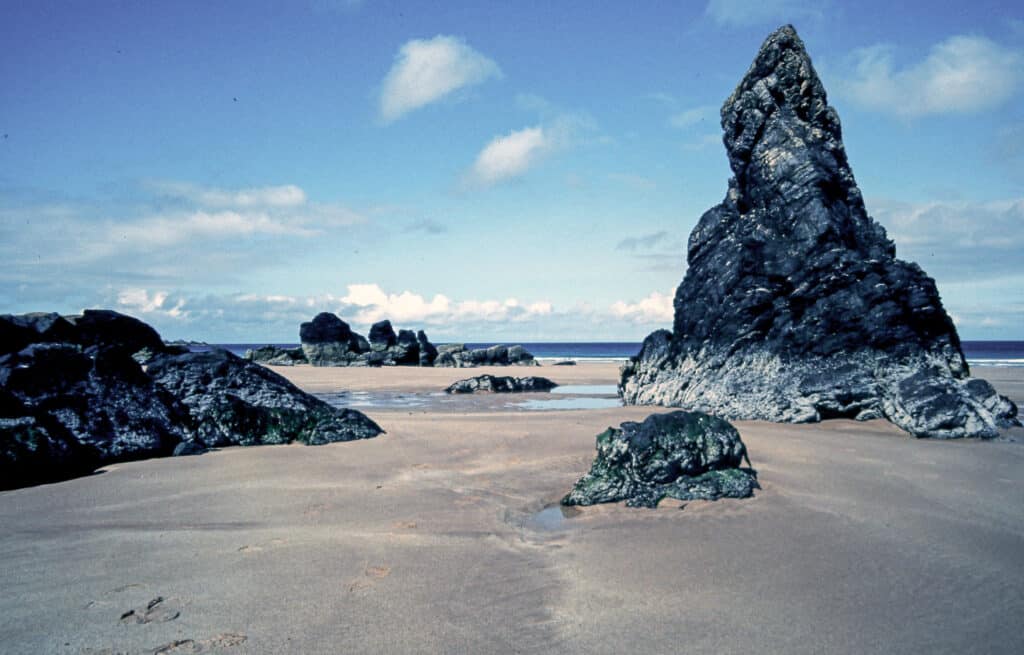
Durness is a memorable north-west coastal stop, with striking beaches and nearby places to explore. Continuing east brings you through the north coast towards Caithness, where attractions include coastal viewpoints and the John O’Groats area. Watch for changing weather and leave more time than you think you need.
Dunrobin Castle, Golspie
On the eastern part of the journey, Dunrobin Castle near Golspie is a worthwhile historic stop. The castle is known for its distinctive architecture and gardens. Check opening dates before travelling, as visitor arrangements can be seasonal.

Worthwhile detours that are NOT on the official NC500
Our original Dubbed Out guide included some excellent places that aren’t actually on the official circular route. They can still be part of a longer Scottish road trip; it’s simply important to label them correctly.
Eilean Donan Castle
Eilean Donan Castle, near Dornie on the road towards Skye, is a popular addition if you travel beyond the south-western NC500 route. It is a detour, not an official NC500 stop. The original photograph near the beginning of this guide shows a red VW campervan with the castle behind it.
The Fairy Pools, Isle of Skye
The Fairy Pools on Skye are beautiful waterfalls and pools set beneath the Cuillin mountains. However, the Isle of Skye is outside the NC500. Add it only if you have extra days and are happy to extend the journey. Never underestimate the time needed to reach and explore Skye.

The Kelpies, Falkirk – an optional stop on the journey north
Travelling to Inverness from central or southern Britain? The spectacular Kelpies sculptures in Falkirk can make a memorable stop on your way through Scotland. But Falkirk is far south of the NC500 itself, and the Kelpies should not be described as an NC500 attraction.

Driving the NC500 safely in a VW campervan or motorhome
Single-track roads and passing places
Parts of the NC500 use single-track roads where traffic travelling in both directions shares a narrow carriageway. Passing places are essential:
- Slow down and watch well ahead for approaching vehicles.
- Use passing places correctly and allow following traffic to pass where safe.
- Never park in a passing place for photographs, lunch or an overnight stop.
- Be prepared to reverse to a suitable passing place if needed.
- Allow extra space for cyclists, livestock, pedestrians and local traffic.
- Do not form a convoy of campervans on narrow roads.
The official NC500 team warns that drivers who cannot reverse their vehicle confidently over a substantial distance should avoid demanding single-track roads. If you have a larger motorhome, use its motorhome and campervan advice before finalising your route.
Bealach na Bà and the B869 Drumbeg Road
The official NC500 guidance highlights both roads as unsuitable for larger motorhomes. It advises the A832 alternative to Bealach na Bà and the A894 alternative to the B869 Drumbeg Road. Do not rely solely on a sat-nav to decide whether a narrow road is appropriate for your vehicle.
Before you set off
Check tyres and pressures, lights, brakes, fluid levels, wipers, mirrors, breakdown cover and the overall weight of your van. A heavily loaded campervan with water, camping equipment, passengers and bikes can be surprisingly close to its payload limit.
For a simple starting point, see our Dubbed Out campervan vehicle checks article. If you have concerns about your vehicle’s mechanical condition, get it checked professionally before the trip.
Can you wild camp in a campervan on the NC500?
No: Scotland’s statutory wild-camping access rights do not give you permission to park or stay overnight in a campervan or motorhome wherever you like.
The Scottish Outdoor Access Code allows responsible lightweight tent camping in places covered by access rights, but NatureScot explicitly excludes access with motor vehicles. This is the key difference between a backpacker with a tent and someone travelling in a campervan.
That does not mean sleeping in a parked vehicle is automatically unlawful everywhere in Scotland. Whether an overnight stop is allowed depends on the location, landowner’s permission where needed, parking restrictions, road traffic law and local rules. Use designated campsites, authorised overnight stopovers or parking spaces where your stay is permitted. Never treat the absence of a prohibition sign as universal permission.
Where an overnight stop is permitted, keep the activity within the vehicle unless the site expressly allows camping outside it. Never block gateways or passing places, put out an awning in an ordinary car park or leave litter, grey water or toilet waste behind.

Highland Council’s designated overnight parking scheme
Highland Council operates a Campervan and Motorhome Scheme for self-contained vehicles using its designated overnight car parks. At the time of this review, the council listed 12 locations, including options around Inverness, Caithness, Durness, Golspie, Ullapool and Gairloch.
Its published rules include parking between 10pm and 8am, no return to the same car park within 72 hours, and keeping activities inside the vehicle. Spaces are first come, first served; the scheme is not a guarantee of a space and it does not turn ordinary car parks into campsites. Check the current official locations, membership details and rules before relying on a stop.
NC500 campsites worth researching
These are real campsite operators checked against their own websites in November 2026. They are starting points, not a promise of a pitch. Booking arrangements, vehicle limits, facilities, tariffs and opening dates can change.
- Applecross Campsite: A base on the Applecross Peninsula, with touring and camping pitches. The operator publishes seasonal opening and booking details.
- Sands Caravan & Camping, Gairloch: A west-coast option near Gairloch, with touring facilities and booking information on its own site.
- Gruinard Bay Caravan Park: Coastal touring and camping near Laide in Wester Ross. Check pitch availability and facilities directly.
- Clachtoll Beach Campsite: Close to Clachtoll Beach in Assynt, with serviced and unserviced pitches. Its booking system publishes opening dates.
- Scourie Caravan and Camping Site: A coastal stop in Scourie village, handy for exploring north-west Sutherland.
- Sango Sands Oasis, Durness: A cliff-top campsite with views over the northern coastline. The operator offers different arrangements in and out of season; check before arrival.
We have deliberately not copied old nightly prices or unverified facilities into this guide. For example, Sango Sands has published limited winter facilities for self-contained vehicles rather than a full year-round campsite service. Check each operator’s latest website before booking.
Water, waste, fuel and other practical essentials
Fresh water, grey water and toilet waste
Use campsite service points or other facilities that specifically accept your type of waste. Never empty a chemical toilet into a public toilet unless the facility expressly permits it, and never discharge waste at a roadside stop, beach or watercourse. Ask the operator before arriving if you need fresh water, an electric hook-up or a disposal point.
Fuel and charging
Fuel stops can be further apart in rural areas than many drivers are used to. Do not wait until the tank is nearly empty. Check fuel availability and opening hours along your planned route, especially if your van has limited range or you are travelling outside normal hours. Electric campervan drivers should plan charging stops with additional flexibility.
Mobile signal and navigation
Signal can be patchy in the Highlands. Download offline maps before leaving, carry a charging cable and keep a note of important campsite contacts. A dedicated motorhome-friendly route planner may help with height, weight and width restrictions, but it is never a substitute for road signs and local guidance.
Weather, midges and seasonal travel
Long summer days are wonderful for sightseeing, but they also bring busier attractions and pitches. Spring and autumn may be quieter, although facilities can have shorter opening seasons. Winter brings reduced daylight and the possibility of ice, snow or severe wind. Check official forecasts and road conditions before every driving day.
Midges can be a nuisance during warmer months, especially in sheltered or damp conditions. Pack suitable repellent, use insect screens and choose where you stop thoughtfully. Good waterproofs, sturdy shoes and warm layers are useful in every season.
Travelling the NC500 with children or dogs
If you’re travelling as a family, keep daily driving distances manageable and build in time for beaches, short walks and rainy-day alternatives. Check which attractions have toilets and whether access suits pushchairs or younger children.
For dogs, check each campsite’s rules, carry water and keep dogs under close control around livestock and wildlife. Coastal paths, cliffs and changeable weather deserve extra caution. Not every beach or attraction has identical dog rules, so check locally.
What should you budget for the NC500?
Your total will depend on fuel consumption, how far you travel to reach Inverness, campsite choices, food, attractions and optional detours. A better approach than relying on an outdated figure is to set separate budgets for:
- Fuel or charging for the NC500 and the journey to and from Inverness.
- Campsites or authorised overnight parking.
- Food, groceries and occasional meals out.
- Castle admissions, tours and family activities.
- An emergency allowance for changes in weather or route.
Book busy-season pitches early, but leave enough flexibility to enjoy unexpected stops.
Frequently asked questions about the NC500 in a campervan
Can a VW T5 or T6 campervan drive the NC500?
Yes, a VW Transporter-sized campervan can be a practical choice for the route. However, no vehicle size makes every road automatically suitable: assess your own driving ability, weather, load and route. Bealach na Bà and other narrow roads still require care.
Can large motorhomes complete the NC500?
Much of the route is accessible to motorhomes, but the official NC500 team recommends alternative routes for larger vehicles and highlights Bealach na Bà and the B869 Drumbeg Road as roads to avoid. Plan around the vehicle’s dimensions and your confidence.
Is wild camping legal in a campervan in Scotland?
Scottish outdoor access rights for lightweight wild camping do not extend to campervans or motorhomes. Overnight vehicle stays depend on site permission, relevant parking law and restrictions. Use authorised sites or suitable permitted parking.
Do you have to book NC500 campsites?
Not every campsite runs the same booking system. Some offer advance bookings, some retain first-come pitches, and arrangements can differ between seasons. Check the operator directly, especially in school holidays.
Is the Isle of Skye part of the NC500?
No. Skye is a separate detour, and its Fairy Pools are not on the official NC500 loop. It can be an excellent addition if you have extra time.
What is the best direction to drive the NC500?
Clockwise and anticlockwise both work. Choose according to the stops you want, weather, campsite availability and which stretches are suitable for your vehicle.
Our final advice: take your time and respect the Highlands
The best NC500 trips are rarely the ones that race from viewpoint to viewpoint. Choose roads that suit your campervan, support local businesses, respect residents and wildlife, and leave every stop as you found it.
This guide was originally put together with contributions from the Dubbed Out VW campervan community. If you’ve driven the route, tell us your favourite stop, campsite or piece of practical advice. Your experience may help another campervan owner plan their first Highland adventure.
Official information and useful links
- Official NC500 motorhome and campervan driving advice
- Official NC500 route-planning advice
- NatureScot: What the Scottish Outdoor Access Code covers
- NatureScot: Camping guidance
- Highland Council: designated overnight car parks and rules
- VisitScotland: North Coast 500
Additional Photo Credits
- Bealach na Bà hairpin – Photograph by Jooniur,
CC BY-SA 4.0,
via Wikimedia Commons. - Clachtoll Beach – Photograph by Alan Reid,
CC BY-SA 2.0,
via Wikimedia Commons. - Sango Bay, Durness – Photograph by Superbass,
CC BY-SA 4.0,
via Wikimedia Commons.