

Do I Need a Special Licence to Drive a Campervan in the UK?
 [Image 1, hero: campervan-licence-hero-vw-t6-dubbed-out-2026.jpg. Caption: A VW T6 in the field at Dubbed Out 2026. Standard Transporters are plated from 2,600kg to 3,200kg, so a car licence usually covers them.]
You don’t need a special licence to drive a campervan. Right up until the day you buy one that’s 50kg too heavy. Then you do, and the seller probably won’t mention it.
Here’s the short answer. Most UK campervans, including most Transporter-style vans, can be driven on a standard car licence. The magic number is 3,500kg, and it lives on a little plate most owners never look at. This guide shows you how to read that plate, how to read the back of your licence, and what older drivers and ex-lorry drivers can still drive. It’s owner-to-owner, not legal advice, and it covers Great Britain. Northern Ireland has its own rules, so check nidirect if you live there.
## Do I need a special licence to drive a campervan in the UK?
Usually not. A full category B car licence covers a petrol or diesel campervan with a maximum authorised mass (MAM) of up to 3,500kg and up to 8 passenger seats. Between 3,500kg and 7,500kg you need category C1. Over 7,500kg you need category C.
The licence follows the plated weight. It doesn’t care how “campervan-ish” your van looks. A big van plated at 3,500kg is fine on a car licence. A smaller van plated at 3,550kg isn’t, unless you have C1.
Electric campervans get a bonus. On a category B licence you can drive a zero-emission electric or hydrogen vehicle up to 4,250kg MAM, as long as it’s built to carry no more than 8 passengers. Hybrids don’t count, and your photocard won’t change to show it.
Get it wrong and GOV.UK says you can be fined up to £1,000 and get 3 to 6 penalty points.
## What 3,500kg actually means, and how to check it
MAM is the most your van is allowed to weigh on the road, fully loaded. That includes the van, you, your passengers, fuel, water and every camping chair you swore you’d leave at home. You’ll also see it called gross vehicle weight (GVW).
It isn’t what your van weighs today. A van that weighs 2,900kg on the weighbridge but is plated at 3,880kg still needs C1. Our campervan payload guide (https://dubbedout.co.uk/latest-news/campervan-payload-explained/) explains how much kit you can actually carry.
### How to read the weight plate
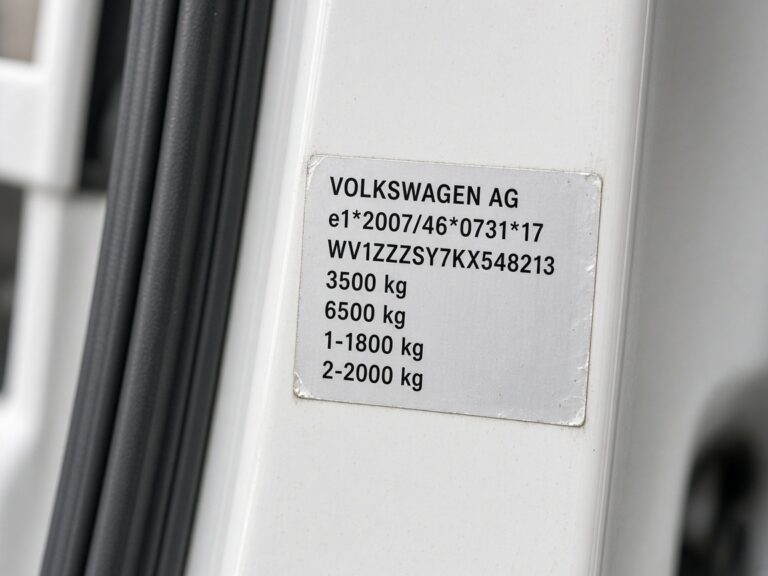
Look for the manufacturer’s plate or sticker. It’s usually inside the driver’s door frame or under the bonnet. The MAM is also in your owner’s manual. On modern European plates, the law sets the order of the weight lines:
1. The first weight is the MAM. This is the one your licence cares about.
2. The second is the gross train weight: the van plus a loaded trailer. If there’s no train weight, GOV.UK says you shouldn’t tow with it.
3. The lines starting “1-” and “2-” are the maximum loads for the front and rear axles.
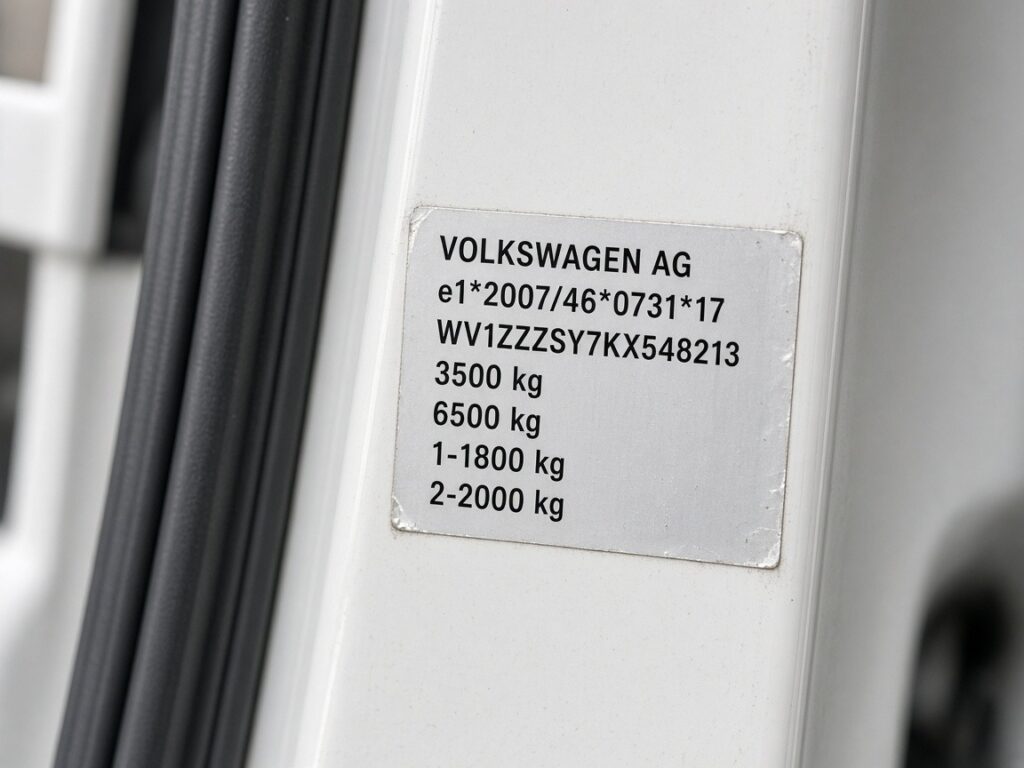 Example plate (mock-up, numbers made up). From the top: maker, approval number, VIN, then MAM 3,500kg, train weight 6,500kg, front axle 1,800kg and rear axle 2,000kg.]
Older vans use the same idea, even if the plate looks like it came out of a museum.
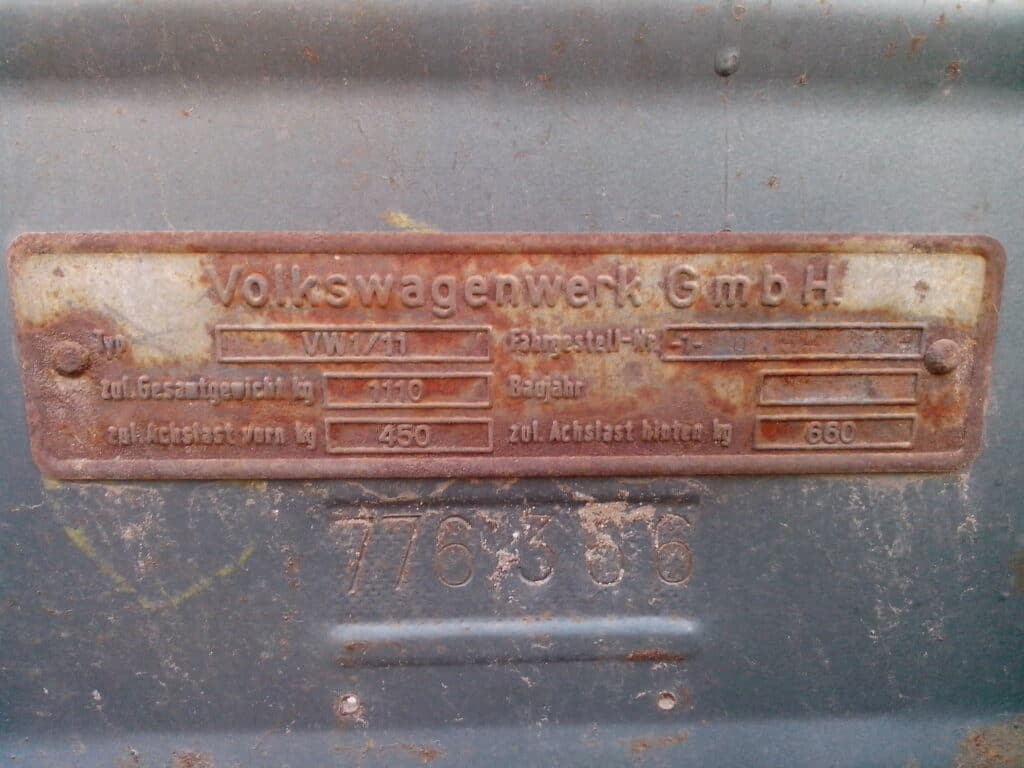 A genuine vintage VW Beetle maker’s plate, in German: 1,110kg total permitted weight, 450kg front axle and 660kg rear axle. Photo: ChengH, CC BY-SA 3.0, Wikimedia Commons.]
Got a Transporter? Our guide to T26, T28, T30 and T32 (https://dubbedout.co.uk/latest-news/t26-t27-t28-t30-t32/) explains what those weight codes mean.
## Category B, C1 and C: which licence, and from what age?
– Category B (car): from 17. Covers vans up to 3,500kg MAM, or 4,250kg if zero-emission.
– Category C1 (medium vehicles): normally from 18. Covers 3,500kg to 7,500kg, with a trailer up to 750kg.
– Category C (large vehicles): normally from 21. Covers anything over 3,500kg, including motorhomes over 7,500kg.
There are a few official exceptions to those ages, for example for the armed forces. Check GOV.UK’s licence categories page if that applies to you.
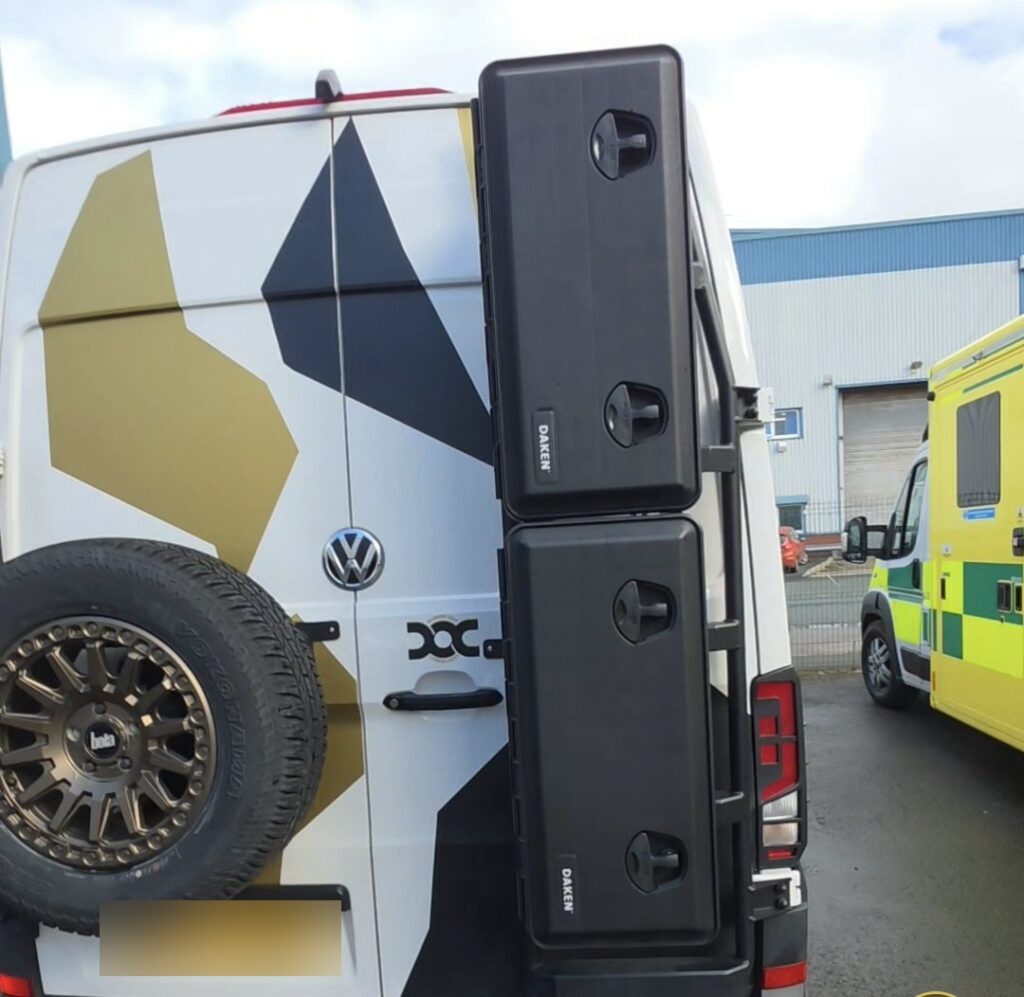 Big vans like this Crafter can be plated either side of 3,500kg. Check the plate before you buy.]
## An idiot’s guide to the back of your licence
Flip your photocard over. That grid is where the truth lives.
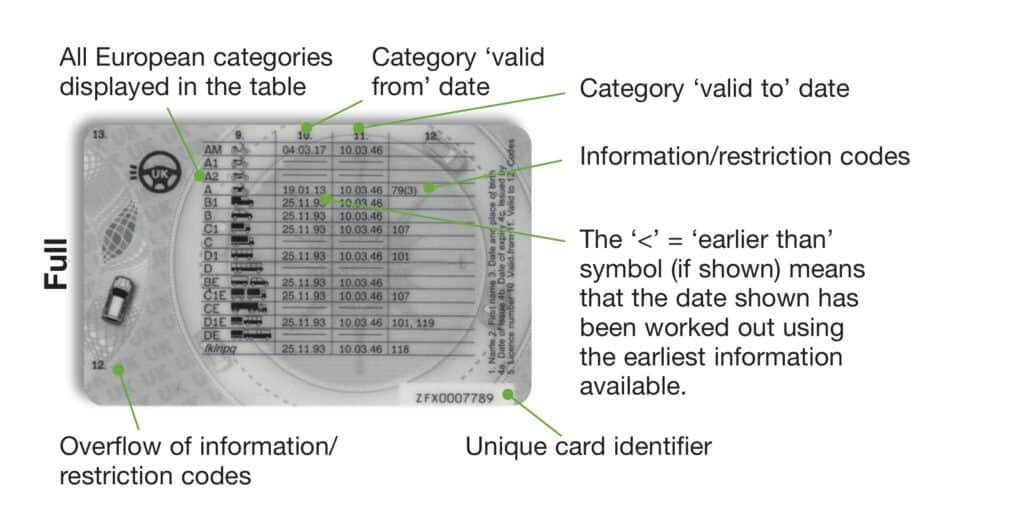 DVLA’s official specimen, not anyone’s real licence. Contains public sector information licensed under the Open Government Licence v3.0. Source: DVLA, Information on driving licences (INS57P).]
– Column 9 lists every category, with little pictures.
– Column 10 is the date each category is valid from.
– Column 11 is the date it’s valid to.
– Column 12 holds the restriction codes.
The golden rule: if a category has lines instead of dates, you can’t drive it. The one official exception is that a test in a bigger vehicle can cover a smaller one of the same type.
The codes are limits, not bonus powers. These are the ones van owners ask about:
– 01: you need glasses or contact lenses.
– 78: automatics only.
– 101: not for hire or reward, so no making a profit. Often found on older minibus (D1) entitlement.
– 102: drawbar trailers only.
– 107: not more than 8,250kg. The usual limit on older C1E towing.
– 111: limited to 16 passenger seats.
– 119: the weight limit for the vehicle doesn’t apply.
Card looking a bit tired? Check what you can drive for free at https://www.gov.uk/view-driving-licence. And please don’t post a photo of your own licence online. DVLA warns against it, because it’s an identity theft gift.
## Passed your test before 1 January 1997? Grandfather rights explained
Lucky you. If you passed your car test before 1 January 1997, your licence should already show C1, C1E (limited to 8,250kg, code 107), D1 and D1E (not for hire or reward). That C1 lets you drive a motorhome up to 7,500kg with no extra test. Check your card, because “should” is doing some work there.
You keep those extras until your licence runs out at 70. At 70, you can renew your car licence online as normal. But you can’t renew C1 or D1 online. To keep C1, you apply by post with a D4 medical report from a doctor, and you must meet the higher lorry and bus medical standards. After that, you need a fresh D4 every 3 years to keep C1.
## Old Class 1 and Class 2 HGV licences: what they mean now
If you drove lorries back in the day, your old classes have new names:
– HGV Class 1 is now category CE (a vehicle over 3,500kg with a trailer over 750kg).
– HGV Class 2 or 3 is now category C (a vehicle over 3,500kg with a trailer up to 750kg). Some show as CE with code 102, drawbar trailers only.
While C or CE is valid, you can drive a motorhome of any weight. Want to tow a trailer over 750kg behind it? That needs CE.
Lorry entitlement isn’t a “till 70” licence, though. It lasts 5 years at most. From 45 you renew every 5 years with a D4 medical. From 65 you renew every year. Renewal is free, but doctors and opticians usually charge for the medical.
### What if my lorry entitlement has lapsed?
You keep your car entitlement. You must not drive anything that needed the lapsed C or CE. Beyond that, check your card:
– Passed your car test before 1997? Your grandfather C1 may still be there. Look for dates next to C1.
– Passed on or after 1 January 1997? GOV.UK doesn’t clearly say C1 survives. Only drive a van over 3,500kg if C1 or C still shows valid dates.
Want it back? GOV.UK tells returning drivers to renew an expired licence, usually with forms D2 and D4. Ask DVLA whether your case needs a new test.
### Do I need Driver CPC for a heavy motorhome?
Driver CPC is the qualification for driving lorries professionally. GOV.UK says you might not need it if you carry passengers or goods for personal use, not commercially. A family holiday should sit on that side of the line. If you’re unsure, GOV.UK says to get legal advice.
## Up-plating and down-plating: when a new number changes your licence
Up-plating raises your van’s plated weight, usually so you can carry more. Down-plating lowers it. The licence follows the new number.
Up-plate a diesel van past 3,500kg, and a driver who passed on or after 1 January 1997 needs C1. Down-plate a heavier van to 3,500kg or under, and it can come back into category B.
If you change the weight of a large vehicle, such as a campervan, DVLA needs a plating certificate or a design weight certificate to update your V5C. DVSA says up-plating can also push you into a higher vehicle tax band. Tell your insurer too. Our insurance guide (https://dubbedout.co.uk/latest-news/campervan-insurance-uk-explained-self-build-vs-motor-caravan/) explains why.
Converting a van to a camper doesn’t change the licence you need on its own. Changing the V5C body type to motor caravan is about looks, not licences. Our pop-top reclassification guide (https://dubbedout.co.uk/latest-news/dvla-motor-caravan-pop-top-guide/) covers that.
## Towing behind your campervan
Passed your car test on or after 1 January 1997? Since 16 December 2021, a car pass gives you BE automatically. You can tow a trailer up to 3,500kg MAM, as long as the van and trailer together don’t exceed 7,000kg MAM. If BE isn’t printed on your card yet, DVLA adds it at your next renewal.
Passed before 1997? You can usually drive a combination up to 8,250kg MAM. Either way, stay within the van’s own towing limit.
## How do I get a C1 licence?
1. Hold a full car licence.
2. Apply for provisional C1 using form D2, plus a D4 medical filled in by a doctor. There’s no DVLA application fee, but the doctor can charge.
3. Pass the lorry theory test.
4. Pass the C1 driving test.
If buying your first van is the bigger worry, our first campervan costs guide (https://dubbedout.co.uk/latest-news/buying-first-campervan-cost-uk/) has you covered.
## FAQ
### Can I drive a campervan on a standard car licence?
Yes, if its MAM is 3,500kg or under, or up to 4,250kg for a zero-emission electric or hydrogen van, and you hold a full category B licence.
### What if I passed my test before 1 January 1997?
You should already have C1, which covers campervans and motorhomes up to 7,500kg MAM. Check the back of your photocard or view your licence online.
### What happens to C1 when I turn 70?
You can still renew your car licence online. To keep C1, apply by post with a D4 medical and meet the lorry medical standards. Then repeat the D4 every 3 years.
### Does converting my van change the licence I need?
No. The licence follows the plated MAM, not the body type on your V5C. It only changes if the van is re-plated.
### I used to have a Class 1 or Class 2 HGV licence. What can I drive now?
If it’s still valid, Class 1 is now CE and Class 2 is now C, which covers any weight of motorhome. If it has lapsed, you keep your car licence. Check your card before driving anything over 3,500kg.
### Can I up-plate my van and still drive it on a car licence?
Only if the new MAM stays at 3,500kg or under, or 4,250kg for a zero-emission van. Go higher and post-1997 drivers need C1.
### How do I get C1 if I passed after 1997?
Apply for provisional C1 with a D2 form and a D4 medical. Then pass the lorry theory test and the C1 driving test.
### What can I tow behind my campervan?
Post-1997 drivers can tow a trailer up to 3,500kg, with a combined MAM up to 7,000kg. Pre-1997 drivers can usually go up to 8,250kg combined. Always stay within the van’s towing limit.
## Before you go
Rules change, so double-check GOV.UK before you buy or up-plate. If this saved you a nasty surprise at the dealer, share it with a mate who’s shopping for their first van.
Want early access when tickets for Dubbed Out 2027 go on sale on 31 January 2027 via Ticket Tent? Join the newsletter at https://dubbedoutfestival.co.uk and you’ll hear first.
